Virtual Reality Lab Proves How Fly Balls Are Caught


While baseball fans still rank "The Catch" by Willie Mays in the 1954 World Series as one of the greatest baseball moments of all times, scientists see the feat as more of a puzzle: How does an outfielder get to the right place at the right time to catch a fly ball?


Thousands of fans (and hundreds of thousands of YouTube viewers) saw Mays turn his back on a fly ball, race to the center field fence and catch the ball over his shoulder, seemingly a precise prediction of a fly ball's path that led his team to victory. According to a recent article in the Journal of Vision ("Catching Flyballs in Virtual Reality: A Critical Test of the Outfielder Problem"), the "outfielder problem" represents the definitive question of visual-motor control. How does the brain use visual information to guide action?

To test three theories that might explain an outfielder's ability to catch a fly ball, researcher Philip Fink, PhD, from Massey University in New Zealand and Patrick Foo, PhD, from the University of North Carolina at Ashville programmed Brown University's virtual reality lab, the VENLab, to produce realistic balls and simulate catches. The team then lobbed virtual fly balls to a dozen experienced ball players.


"The three existing theories all predict the same thing: successful catches with very similar behavior," said Brown researcher William Warren, PhD. "We realized that we could pull them apart by using virtual reality to create physically impossible fly ball trajectories."

Warren said their results support the idea that the ball players do not necessarily predict a ball's landing point based on the first part of its flight, a theory described as trajectory prediction. "Rather than predicting the landing point, the fielder might continuously track the visual motion of the ball, letting it lead him to the right place at the right time," Warren said.


Because the researchers were able to use the virtual reality lab to perturb the balls' vertical motion in ways that would not happen in reality, they were able to isolate different characteristics of each theory. The subjects tended to adjust their forward-backward movements depending on the perceived elevation angle of the incoming ball, and separately move from side to side to keep the ball at a constant bearing, consistent with the theory of optical acceleration cancellation (OAC). The third theory, linear optical trajectory (LOT), predicted that the outfielder will run in a direction that makes the visual image of the ball appear to travel in a straight line, adjusting both forward-backward and side-to-side movements together.

Fink said these results focus on the visual information a ball player receives, and that future studies could bring in other variables, such as the effect of the batter's movements or sound.
"As a first step we chose to concentrate on what seemed likely to be the most important factor," Fink said. "Fielders might also use information such as the batter's swing or the sound of the bat hitting the ball to help guide their movements."

Sources:  Catching fly balls in virtual reality: A critical test of the outfielder problem and Association for Research in Vision and Ophthalmology

Boomer Brains Need Exercise


Moderate physical activity performed in midlife or later appears to be associated with a reduced risk of mild cognitive impairment, whereas a six-month high-intensity aerobic exercise program may improve cognitive function in individuals who already have the condition, according to two reports in the January issue of Archives of Neurology.

Mild cognitive impairment is an intermediate state between the normal thinking, learning and memory changes that occur with age and dementia, according to background information in one of the articles. Each year, 10 percent to 15 percent of individuals with mild cognitive impairment will develop dementia, as compared with 1 percent to 2 percent of the general population. Previous studies in animals and humans have suggested that exercise may improve cognitive function.

In one article, Laura D. Baker, Ph.D., of the University of Washington and Veterans Affairs Puget Sound Health Care System, Seattle, and colleagues report the results of a randomized, controlled clinical trial involving 33 adults with mild cognitive impairment (17 women, average age 70). A group of 23 were randomly assigned to an aerobic exercise group and exercised at high intensity levels under the supervision of a trainer for 45 to 60 minutes per day, four days per week. The control group of 10 individuals performed supervised stretching exercises according to the same schedule but kept their heart rate low. Fitness testing, body fat analysis, blood tests of metabolic markers and cognitive functions were assessed before, during and after the six-month trial.

A total of 29 participants completed the study. Overall, the patients in the high-intensity aerobic exercise group experienced improved cognitive function compared with those in the control group. These effects were more pronounced in women than in men, despite similar increases in fitness. The sex differences may be related to the metabolic effects of exercise, as changes to the body's use and production of insulin, glucose and the stress hormone cortisol differed in men and women.

"Aerobic exercise is a cost-effective practice that is associated with numerous physical benefits. The results of this study suggest that exercise also provides a cognitive benefit for some adults with mild cognitive impairment," the authors conclude. "Six months of a behavioral intervention involving regular intervals of increased heart rate was sufficient to improve cognitive performance for an at-risk group without the cost and adverse effects associated with most pharmaceutical therapies."

In another report, Yonas E. Geda, M.D., M.Sc., and colleagues at Mayo Clinic, Rochester, Minn., studied 1,324 individuals without dementia who were part of the Mayo Clinic Study of Aging. Participants completed a physical exercise questionnaire between 2006 and 2008. They were then assessed by an expert consensus panel, who classified each as having normal cognition or mild cognitive impairment.


A total of 198 participants (median or midpoint age, 83 years) were determined to have mild cognitive impairment and 1,126 (median age 80) had normal cognition. Those who reported performing moderate exercise—such as brisk walking, aerobics, yoga, strength training or swimming—during midlife or late life were less likely to have mild cognitive impairment. Midlife moderate exercise was associated with 39 percent reduction in the odds of developing the condition, and moderate exercise in late life was associated with a 32 percent reduction. The findings were consistent among men and women.

Light exercise (such as bowling, slow dancing or golfing with a cart) or vigorous exercise (including jogging, skiing and racquetball) were not independently associated with reduced risk for mild cognitive impairment.

Physical exercise may protect against mild cognitive impairment via the production of nerve-protecting compounds, greater blood flow to the brain, improved development and survival of neurons and the decreased risk of heart and blood vessel diseases, the authors note. "A second possibility is that physical exercise may be a marker for a healthy lifestyle," they write. "A subject who engages in regular physical exercise may also show the same type of discipline in dietary habits, accident prevention, adherence to preventive intervention, compliance with medical care and similar health-promoting behaviors."

Future study is needed to confirm whether exercise is associated with the decreased risk of mild cognitive impairment and provide additional information on cause and effect relationships, they conclude.

Sources:  JAMA and Archives Journals, Physical Exercise, Aging, and Mild Cognitive Impairment: A Population-Based Study  and Effects of Aerobic Exercise on Mild Cognitive Impairment: A Controlled Trial.

Bodily Benefits Of A Big Butt


If you’re prone to worrying whether your ‘butt looks big in this’, particularly after the holidays, you can take comfort that there may be health benefits.

Oxford University scientists – who have looked at all the evidence on the health effects of storing more fat on the hips, thighs and bum, rather than around the waist – show that having a ‘pear shape’ is not just less bad for you than an ‘apple shape’, but actively protects against diabetes and heart disease.

The team from the Oxford Centre for Diabetes, Endocrinology, and Metabolism (OCDEM) have published their summary of the latest research in the International Journal of Obesity today.

‘The idea that body fat distribution is important to health has been known for some time,’ says Dr Konstantinos Manolopoulos, one of the paper’s authors along with Dr Fredrik Karpe and Professor Keith Frayn.

‘However, it is only very recently that thigh fat and a larger hip circumference have been shown to promote health, that lower body fat is protective by itself.’

He adds: ‘This protective effect is independent of weight. However, if you put on weight, thigh circumference will increase but your waist circumference will also increase, which over-rides the protective effect.’

‘Control of body weight is still the best way to stay healthy, and the advice remains the same: it is important to eat less and exercise more.’

The Oxford researchers explain that the body uses its fat tissues to store energy in the form of fatty acids, which can be released when needed, for example after heavy exercise or a period of starvation. Both tummy and thigh fat handle this process, but fat around the waist is much more active in storing and releasing fatty acids in response to need throughout the day. Thigh fat is used for much longer term storage.

More waist or abdominal fat tends to lead to more fatty acids floating around the body where it can get deposited in other organs like the liver and muscle, and cause harm. This is associated with conditions like diabetes, insulin resistance and heart disease.

Thigh fat on the other hand, traps the fatty acids long term, so they can’t get deposited and cause harm.

'Thigh fat and a larger hip circumference have been shown to promote health, and lower body fat is protective by itself,' said Manolopoulos.

The scientists also review evidence that abdominal fat and thigh fat release different levels of hormones. Waist fat is known to release molecules called pro-inflammatory cytokines, and inflammation is a process linked to diabetes and heart disease.

Thigh fat might also secrete more beneficial hormones like leptin and adiponectin, Dr Manolopoulos says, although this is unclear at the moment.

Dr Manolopoulos says the typical difference in male and female body shapes, with men more likely to have fat around the waist and women have more fat on their thighs and hips, neatly illustrates the health effects of different body shapes.

‘If you looked at a man and woman of the same weight and aged around 40, they would have different weight distributions, and it would be the man that was at higher risk of diabetes and heart disease,’ he says.

‘However, when women go through menopause, as well as changes in their hormones they tend to see a change in body shape. They lose body fat and move to a more ‘male’ fat distribution. They then have the same risk of heart disease and diabetes as men.’

It may be possible to use these findings in the future to reduce people’s health risks but that is a long way off, cautions Dr Manolopoulos.

‘We don’t really know how the body decides where to store fat. At the moment we need to understand more about the mechanisms the body uses. Only then will we be able to take the next step and try to influence this.’

‘In principle, this should be possible. There is a class of anti-diabetic drugs that is known to redistribute fat in the body from internal organs to fat stored subcutaneously under the skin. This improves symptoms in diabetes,’ he says.

The team at OCDEM, funded by the Wellcome Trust, is working to understand the way the body stores and turns over fat. They recently pinpointed two genes that are associated with differences in people’s body fat distribution and may be important during embryo development.

‘They are weak effects, but this is just a beginning,’ says Dr Karpe, one of the research group heads. ‘Obesity is a big problem, but it may be that the characteristics of that obesity are more important.’

Source: University of Oxford   and "Gluteofemoral body fat as a determinant of metabolic health"

Barefoot Is Better


Knee osteoarthritis (OA) accounts for more disability in the elderly than any other disease. Running, although it has proven cardiovascular and other health benefits, can increase stresses on the joints of the leg. In a study published in the December 2009 issue of PM&R: The journal of injury, function and rehabilitation, researchers compared the effects on knee, hip and ankle joint motions of running barefoot versus running in modern running shoes. They concluded that running shoes exerted more stress on these joints compared to running barefoot or walking in high-heeled shoes.


Sixty-eight healthy young adult runners (37 women), who run in typical, currently available running shoes, were selected from the general population. None had any history of musculoskeletal injury and each ran at least 15 miles per week. A running shoe, selected for its neutral classification and design characteristics typical of most running footwear, was provided to all runners. Using a treadmill and a motion analysis system, each subject was observed running barefoot and with shoes. Data were collected at each runner's comfortable running pace after a warm-up period.

The researchers observed increased joint torques at the hip, knee and ankle with running shoes compared with running barefoot. Disproportionately large increases were observed in the hip internal rotation torque and in the knee flexion and knee varus torques. An average 54% increase in the hip internal rotation torque, a 36% increase in knee flexion torque, and a 38% increase in knee varus torque were measured when running in running shoes compared with barefoot.
 
These findings confirm that while the typical construction of modern-day running shoes provides good support and protection of the foot itself, one negative effect is the increased stress on each of the 3 lower extremity joints. These increases are likely caused in large part by an elevated heel and increased material under the medial arch, both characteristic of today's running shoes.


Writing in the article, lead author D. Casey Kerrigan, MD, JKM Technologies LLC, Charlottesville, VA, and co-investigators state, "Remarkably, the effect of running shoes on knee joint torques during running (36%-38% increase) that the authors observed here is even greater than the effect that was reported earlier of high-heeled shoes during walking (20%-26% increase). Considering that lower extremity joint loading is of a significantly greater magnitude during running than is experienced during walking, the current findings indeed represent substantial biomechanical changes."

Dr. Kerrigan concludes, "Reducing joint torques with footwear completely to that of barefoot running, while providing meaningful footwear functions, especially compliance, should be the goal of new footwear designs."

Source: Elsevier Health Sciences  "The Effect of Running Shoes on Lower Extremity Joint Torques" by D. Casey Kerrigan, MD, Jason R. Franz, MS, Geoffrey S. Keenan, MD, Jay Dicharry, MPT, Ugo Della Croce, PhD, and Robert P. Wilder, MD. It appears in PM&R: The journal of injury, function and rehabilitation, Volume 1, Issue 12 (December 2009), published by Elsevier. The article has been made freely available and may be accessed at: http://www.pmrjournal.org/article/S1934-1482(09)01367-7/fulltext

How Nerves Affect Soccer Penalty Kicks


Research by the University of Exeter shows for the first time the effect of anxiety on a soccer player's eye movements while taking a penalty.

The study shows that when penalty takers are anxious they are more likely to look at and focus on the centrally positioned goalkeeper. Due to the tight coordination between gaze control and motor control, shots also tend to centralise, making them easier to save. The research is now published in the December 2009 edition of the Journal of Sport and Exercise Psychology.

The researchers attribute this change in eye movements and focus to anxiety. Author Greg Wood, a PhD student in the University of Exeter’s School of Sport and Health Sciences said: “During a highly stressful situation, we are more likely to be distracted by any threatening stimuli and focus on them, rather than the task in hand. Therefore, in a stressful penalty shootout, a footballer’s attention is likely to be directed towards the goalkeeper as opposed to the optimal scoring zones (just inside the post). This disrupts the aiming of the shot and increases the likelihood of subsequently hitting the shot towards the goalkeeper, making it easier to save.”

For their study, the researchers focused on 14 members of the University of Exeter football team. They asked the players to perform two series of penalty shots. First, they were simply asked to do their best to score. The researchers made the second series more stressful and more akin to a penalty shoot-out. The players were told that the results would be recorded and shared with the other players and there would be a £50 prize for the best penalty taker.

The players wore special glasses which enabled the researchers to record precise eye movements and analyse the focus of each footballer’s gaze and the amount of time spent looking at different locations in the goal.

The results showed that when anxious, the footballers looked at the goalkeeper significantly earlier and for longer. This change in eye behaviour made players more likely to shoot towards the centre of the goal, making it easier for the keeper to save. The researchers believe that by being made aware of the impact of anxiety on eye movements, and the affect this has on the accuracy of a player’s shot, coaches could address this through training.

Greg Wood continues: “Research shows that the optimum strategy for penalty takers to use is to pick a spot and shoot to it, ignoring the goalkeeper in the process. Training this strategy is likely to build on the tight coordination between eye movements and subsequent actions, making for more accurate shooting. The idea that you cannot recreate the anxiety a penalty taker feels during a shootout is no excuse for not practicing. Do you think other elite performers don’t practice basic aiming shots in darts, snooker or golf for the same reasons? These skills need to be ingrained so they are robust under pressure”.

Source: University of Exeter: Anxiety, Attentional Control, and Performance Impairment in Penalty Kicks.

Ending The Myth Of The Dumb Jock


In the first study to demonstrate a clear positive association between adolescent fitness and adult cognitive performance, Nancy Pedersen of the University of Southern California and colleagues in Sweden find that better cardiovascular health among teenage boys correlates to higher scores on a range of intelligence tests – and more education and income later in life.

"During early adolescence and adulthood, the central nervous system displays considerable plasticity," said Pedersen, research professor of psychology at the USC College of Letters, Arts & Sciences. "Yet, the effect of exercise on cognition remains poorly understood."

Pedersen, lead author Maria Åberg of the University of Gothenburg and the research team looked at data for all 1.2 million Swedish men born between 1950 and 1976 who enlisted for mandatory military service at the age of 18.

In every measure of cognitive functioning they analyzed – from verbal ability to logical performance to geometric perception to mechanical skills – average test scores increased according to aerobic fitness.

However, scores on intelligence tests did not increase along with muscle strength, the researchers found.

"Positive associations with intelligence scores were restricted to cardiovascular fitness, not muscular strength," Pedersen explained, "supporting the notion that aerobic exercise improved cognition through the circulatory system influencing brain plasticity."

The results of the study – in the current issue of PNAS Early Edition – also show the importance of getting healthier between the ages of 15 and 18 while the brain is still changing.

Boys who improved their cardiovascular health between ages 15 to 18 exhibited significantly greater intelligence scores than those who became less healthy over the same time period. Over a longer term, boys who were most fit at the age of 18 were more likely to go to college than their less fit counterparts.

"Direct causality cannot be established. However, the fact that we demonstrated associations between cognition and cardiovascular fitness but not muscle strength . . . and the longitudinal prediction by cardiovascular fitness on subsequent academic achievement, speak in favor of a cardiovascular effect on brain function," Pedersen said.

In their sample, the researchers looked at 260,000 full-sibling pairs, 3,000 sets of twins, and more than 1,400 sets of identical twins. Having relatives enabled the research team to evaluate whether the results might reflect shared family environments or genetic influences.

Even among identical twin pairs, the link between cardiovascular health and intelligence remained strong, according to the study. Thus, the results are not a reflection of genetic influences on cardiovascular health and intelligence. Rather, the twin results give further support to the likelihood that there is indeed a causal relationship, Pedersen explained.

"The results provide scientific support for educational policies to maintain or increase physical education in school curricula," Pedersen said. "Physical exercise should be an important instrument for public health initiatives to optimize cognitive performance, as well as disease prevention at the society level."

Source: University of Southern California

Sports Science Gym Bag - 12-8-09


Wow, what are the odds that I lead off this week's Gym Bag with a Tiger Woods story?  Don't worry, this article has no mention of Escalades, golddiggers or mothers-in-law.  Plus, plenty of other great stuff from the sports science world.


The Tiger Woods Effect

 Success is intimidating. When we compete against someone who's supposed to be better than us, we start to get nervous, and then we start to worry, and then we start to make stupid mistakes. That, at least, is the lesson of a new working paper by Jennifer Brown, a professor at the Kellogg school.
Brown demonstrated this psychological flaw by analyzing data from every player in every PGA tournament from 1999 to 2006. The reason she chose golf is that Tiger Woods is an undisputed superstar, the most intimidating competitor in modern sports. (In 2007, Golf Digest noted that Woods finished with 19.62 points in the World Golf Ranking, more than twice as many as his closest rival. This meant that "he had enough points to be both No. 1 and No. 2.") Brown also notes that "golf is an excellent setting in which to examine tournament theory and superstars in rank-order events, since effort relates relatively directly to scores and performance measures are not confounded by team dynamics." In other words, every golfer golfs alone...

Vince Young
The underlying assumption of the Wonderlic test is that players who are better at math and logic problems will make better decisions in the pocket. At first glance, this seems like a reasonable conjecture. No other position in sports requires such extreme cognitive talents. A successful quarterback will need to memorize hundreds of offensive plays and dozens of different defensive formations. They'll need to spend hours studying game tape of their opponents so that, when they're on the field, they can put that knowledge to use. In many instances, quarterbacks are even responsible for changing the play at the line of scrimmage. They are like a coach with shoulder pads...

UN calls for football tax to fund education for poor children 
The United Nations today launches an appeal to FIFA football leagues, including the Premier League, to place a small levy on sponsorship revenues that would help get 2 million children in poor countries into school over the next five years...

Pushing Past the Pain of Exertion
LAST November, Kara Goucher ran the ING New York City Marathon, her first 26.2-mile race. Even though she was an Olympian who had placed 10th in the 10,000 meter race in 2008 in Beijing — running the equivalent of 6.2 miles — she felt fear.  “I was really scared I wouldn’t be able to handle the pain for that long,” said Ms. Goucher, 31, who had never run more than 18 miles at a time before training for the marathon. “Now I was asking myself to run eight miles farther, a lot faster. It was daunting.”

Coaching and science: What's the big deal and who cares for the science?
"As promised, today begins a series of posts on coaching and science, and how the science can be, should be, and sometimes is, and often is not, applied to athlete preparation. Obviously, it comes with an endurance focus, but there's no reason why sprint coaches and team sport coaches can also not glean some information from this.
This is a series that was inspired by my visit to the US Olympic Center in Colorado Springs. I was lucky enough to be invited there by Prof Randy Wilber of the USOC, who had organized a symposium on altitude training. The symposium brought together scientists, coaches, athletes and mangers from 22 different countries, and included 32 Olympic athletes, and numerous sporting codes, Summer and Winter Olympics among them..."

Belichick had the numbers on his side
Among the countless criticisms hurled at Patriots coach Bill Belichick for his decision to go for it on fourth down Sunday night, former Colts coach Tony Dungy summed up the most popular when, speaking on NBC, he said, “You have got to play the percentages and punt the ball.’’ What Dungy did not realize, though, is that “the percentages’’ dictated that Belichick do exactly what he did...


Short Heels and Long Toes: A Surprising Recipe for Speed
Track coaches have long claimed that the best sprinters are born, not made. Now, new research on the biomechanics of sprinting suggests that at least part of elite athletes’ impressive speed comes from the natural shape of their foot and ankle bones.
Using ultrasound imaging, researchers compared the feet of 12 top college sprinters with those of 12 mere mortals. Surprisingly, the athletes had particularly short heels and longer-than-average toes — features that actually put them at a mechanical disadvantage when running.
“What we found is that sprinters actually had less mechanical advantage than the non-sprinter subjects that we tested,” said biomechanics researcher Stephen Piazza of Penn State University, co-author of the study published Friday in the Journal of Experimental Biology. “This was surprising to us because we expected that sprinters needed all the help they could get.”

The Fastest Man On No Legs


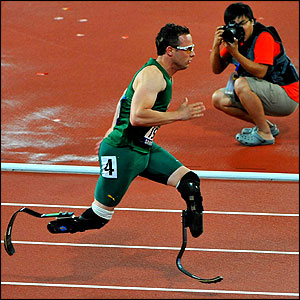
In an ironic twist, Oscar Pistorius' disability has now been shown to be an unfair advantage. The South African sprinter, who races with two prosthetic lower legs, has been the subject of a see-saw legal battle trying to determine if his carbon fiber, crescent-shaped manufactured legs give him an unfair advantage.

Now, two sports scientists have published new research showing that the legs, known as "Cheetahs," make him 15-20 percent faster, equal to 10 seconds over a 400 meter race, then he otherwise would be with natural legs.

In 2008, the Court of Arbitration for Sport (CAS) overturned a competition ban placed on Pistorius from the International Association of Athletics Federations (IAAF), track and field's governing body. Seven scientists produced research that refuted the IAAF's contentions and Pistorius was cleared in time to try for a spot on the Beijing Olympic squad. He just missed making that team by .7 seconds, but is now training for the 2012 London games. He did go on the win three gold medals in the 2008 Paralympics.

Pistorius, known as the Blade Runner, was born without fibula bones in his lower legs, resulting in a double amputation at the age of 11 months. At age 18, he won the 200m race at the 2004 Summer Paralympics, followed by a gold medal in the 2005 South African championships against able-bodied competitors.

Of course, when the discussion is about steroids, blood doping or even corked bats, the athlete becomes the villian. For the "fastest man on no legs," as Pistorius is often called, there are mixed opinions, ranging from those that champion the rights and progress of disabled athletes to those that want to preserve the perceived "level playing field" and integrity of the sport.

Supporting the CAS appeal, seven scientists showed that the IAAF's research (which held that Pistorius should not compete) was not valid. However, according to two of the scientists, Peter Weyand of Southern Methodist University in Dallas and Matthew Bundle of the University of Wyoming, they were careful not to imply that there was no advantage. "We are pleased to finally be able to go public with conclusions that the publishing process has required us to keep confidential until now. We recognized that the blades provide a major advantage as soon as we analyzed the critical data more than a year and a half ago," said Weyand and Bundle in a statement.


They explain that all of the group's research did not become public at the CAS hearing because, first, the CAS only asked them to refute the earlier research based on different logic and, second, the long timeline of the peer-review process of academic research just now made it possible to publish.

Specifically, what Weyand and Bundle found was that the lightweight blades weigh less than half of what a comparable human lower leg would, allowing Pistorius to swing his leg 15.7 percent faster than the average of five former 100m world record holders. They used high-speed motion cameras to compare leg speed and gait. "Even in comparison to those male sprinters with the most extreme adaptations for speed in recorded human history, Oscar Pistorius has limb repositioning times that are literally off the charts," Bundle said. "Usain Bolt is considered somewhat freakish because he outruns his opponents by 2-4 percent. At top speed, Oscar Pistorius repositions his limbs 15 percent more rapidly than six of the most recent world record holders in the 100 meter dash, including Usain Bolt."

In addition, because of how the Cheetahs, from Icelandic manufacturer Ossur, position his upper body, he can leave each "foot" on the ground longer, generating more force with each stride. "He repositions his limbs so fast that he doesn't need to get his body back up into the air so high like other sprinters, and that lowers the force he needs to generate," Weyand told Sports Illustrated. "The muscular forces he has to generate are less than half of what an intact sprinter has to generate to go the same speed."

Their research was part of a Point-Counterpoint feature in the current online edition of the Journal of Applied Physiology. In the Counterpoint reply, led by Hugh Herr of MIT, the remaining five scientists contend that studying just one double amputee does not provide enough evidence that the Cheetah legs will consistently provide an advantage. "The notion that lightweight prostheses are the only reason for Pistorius' rapid swing times ignores that he has had many years to train and adapt his neuromuscular system to using prostheses," the authors write.

The published research should not cause the CAS to reconsider and, as of now, Pistorius is still eligible to compete for a spot in London. He seems to be keeping all of this debate in perspective, "When people ask me what it's like having artificial legs, I reply, 'I don't know. What's it like having real legs?'" He adds, "Some people view themselves as disabled because they have one or two disabilities. But what about the millions and millions of abilities they have?"

Sports Science Weekly Gym Bag - 10-28-09


Welcome to a World Series edition of the Weekly Sports Science Gym Bag, a collection of some of the best stuff I've found in the last week.  A few more baseball stories are included, while you watch the Yankees lose in 6 games!

The Overmanager: Why the New York Yankees' Joe Girardi is too smart for his own good
To play in the NFL, you have to make a show of going to college. To play in the NBA, you have to get through high school. To sign a contract with a major league baseball team, all you have to do is convince someone you're 16, provided you weren't born in a country with inconvenient labor laws. Perhaps this goes some way toward explaining both the high reverence in which the intellectual is held in baseball and the low standards necessary to qualify as one...

Running To The Right Beat
With the Fall marathon season in full swing, thousands of runners are gearing up for the big day.  Just as important as their broken-in shoes and heart rate monitor is their source of motivation, inspiration and distraction: their tunes.  Several recent studies try to chase down the connection between our ears and our feet.
..

Phys Ed: Do More Bicyclists Lead to More Injuries?
Recently, surgeons and emergency room physicians at the Rocky Mountain Regional Trauma Center in Denver noticed a troubling trend. They seemed to be seeing cyclists with more serious injuries than in years past. Since many of the physicians at the hospital, a Level I trauma center serving the Denver metropolitan area, were themselves cyclists, they wondered if their sense of things was accurate.  So the doctors began gathering data on all cycling-related trauma admittances at the hospital and dividing them into two blocks, one covering 1995-2000 and the other 2001-6...

Football
In light of a recent post on the difficulty of changing our decision-making habits - even when we're aware that our habits are biased and flawed - I thought it might be interesting to look at two examples from professional football. Why sports? Given the intense competitive pressure in the NFL - there's a thin line between victory and ignominy - you'd expect head coaches to have corrected many of their decision-making mistakes, especially once those mistakes have been empirically demonstrated. But you'd be wrong. 
Consider some research done by David Romer, an economist at UC Berkeley, who published a 2001 paper entitled "Do Firms Maximize? Evidence From Professional Football". The question Romer was trying to answer is familiar to every NFL fan: what to do on 4th down? Is it better to bring on the kicking team for a punt or field-goal attempt? Under what conditions should coaches risk going for it?


Missed Kicks Make Brain See Smaller Goal Post
Flubbing a field goal kick doesn’t just bruise your ego — new research shows it may actually change how your brain sees the goal posts.  In a study of 23 non-football athletes who each kicked 10 field goals, researchers found that players’ performance directly affected their perception of the size of the goal: After a series of missed kicks, athletes perceived the post to be taller and more narrow than before, while successful kicks made the post appear larger-than-life.  Professional athletes have long claimed that their perception changes when they’re playing well — they start hitting baseballs as large as grapefruits, or aiming at golf holes the size of a bucket — but many scientists have been slow to accept that performance can alter visual perception...  

Baseball: Head-first Slide Is Quicker
Base running and base stealing would appear to be arts driven solely by a runner's speed, but there's more than mere gristle, bone and lung power to this facet of baseball -- lots of mathematics and physics are at play. Who gets there faster, the head-first slider or the feet-first?

Pump your arms to speed up your legs, thanks to “neural coupling”
“Keep pumping your arms!” That’s one of those canonical pieces of advice that it seems every coach gives to his or her runners. The idea is that, late in a run or race when your legs are burning and you’re starting to slow down, if you keep moving arms briskly, your legs will follow. It’s a nice idea — it’s always good to have some concrete piece of advice that you can hang onto when it seems like the world is about to explode. But does it work?
Unfortunately, I don’t know. But in the course of researching a completely different topic today, I stumbled on an interesting piece of research by Daniel Ferris, a University of Michigan researcher who’s best known for his research into assisted movement using robotic exoskeletons. The paper, which appeared in the journal Exercise and Sport Science Reviews back in 2006, is called “Moving the arms to activate the legs.” The full text is available here...

The Human Body Is Built for Distance
Does running a marathon push the body further than it is meant to go?  The conventional wisdom is that distance running leads to debilitating wear and tear, especially on the joints. But that hasn’t stopped runners from flocking to starting lines in record numbers.  Last year in the United States, 425,000 marathoners crossed the finish line, an increase of 20 percent from the beginning of the decade, Running USA says. Next week about 40,000 people will take part in the New York City Marathon. Injury rates have also climbed, with some studies reporting that 90 percent of those who train for the 26.2-mile race sustain injuries in the process...

Running To The Right Beat


With the Fall marathon season in full swing, thousands of runners are gearing up for the big day.  Just as important as their broken-in shoes and heart rate monitor is their source of motivation, inspiration and distraction: their tunes.

Running with music has become so common that the two biggest names in both industries, Nike and Apple, have been joined at the hip with the Nike + iPod combination. So, what is it about music and running, or any exercise, that feels so right?

Several recent studies try to chase down the connection between our ears and our feet.

For the last 20 years, Costas Karageorghis, a sports psychologist at Britain’s Brunel University, has been setting the research pace for understanding our need to groove and move.

In addition to his lab research, Karageorghis has helped create a half marathon in London that tries to find the perfect music mix of live bands based on his research of human reaction to rhythm. The second annual "Run to the Beat" event was held a few weeks ago with 9,000 laboratory rats, er, runners either enjoying the live music or listening to their own mix of tunes on their MP3.  Karageorghis even offered a scientific selection of songs based on his findings.

According to Kargeorghis, there are four factors that contribute to a song's motivational qualities: rhythm response, musicality, cultural impact and association.

The first two are known as "internal" factors as they relate to the music's structure while the second two are "external" factors that reflect how we interpret the music. Rhythm response is tied to the beats per minute (bpm) of the song and how well it matches either the cadence or the heartbeat of the runner. A song's structure such as its melody and harmony contribute to its musicality. The external factors consider our musical background and the preferences we have for a certain genre of music and what we have learned to associate with certain songs and artists.

Picking the right music can have several benefits.

Syncing beats per minute with an exercise pace increases your efficiency. In a recent study, subjects who cycled in time to music found that they required 7 percent less oxygen to do the same work when compared to music playing in the background. Music can also help block out the little voice in your brain telling you its time to quit. Research shows that this dissociation effect results in a 10 percent reduction in perceived effort during treadmill running at a moderate intensity.

In the current study, published in the Journal of Sport and Exercise Psychology, 30 subjects synchronised their pace to the tempo of the music which was 125 bpm. Before the experiment, a pool of music was rated using a questionnaire tool (the Brunel Music Rating Inventory) which then selected the most motivational pieces for the treadmill test. The subjects were given a choice of either pop or rock music.

When compared to a no-music control, the motivational synchronised music led to a 15 percent improvement in endurance.

"The synchronous application of music resulted in much higher endurance while the motivational qualities of the music impacted significantly on the interpretation of fatigue symptoms right up to the point of voluntary exhaustion," Karageorghis reported.

Matching the beats per minute of our music with our exercise heart rate also takes an interesting non-linear path, according to research.

Karageorghis found that when our hearts are performing at between 30 and 70 percent of maximum, we prefer a somewhat linear increase from 90 to 120 bpm. However, when we reach our anaerobic threshold between 70 and 80 percent of maximum, we prefer a jump in rhythm from 120 to 150 bpm. Above 80 percent of maximum heart rate, a plateau is reached where even faster music is not preferred.

Another new study by researchers from Liverpool John Moores University, and detailed online in the Scandinavian Journal of Medicine & Science in Sports, looked at the tempo angle differently. Instead of a mix of different songs at different tempos, they asked a group of cyclists to pedal to the same song over three different trials.

What the subjects did not know is that the researchers first played the song at normal speed, but then increased or decreased the speed of the same song by 10 percent. The small change was not enough to be noticed, but it did have an effect on performance.

Speeding up the music program increased distance covered/unit time, power and pedal cadence by 2.1 percent, 3.5 percent and 0.7 percent, respectively. Slowing the program produced falls of 3.8 percent, 9.8 percent and 5.9 percent. The researchers concluded that we increase or decrease our work effort and pace to match the tempo of our music.

Finding the right beat has now become even easier with a couple of cool software plug-in tools, Cadence or Tangerine.  Cadence is an iPhone/iPod Touch app, while Tangerine is Mac only. By integrating with your iTunes library, they can build a custom playlist based on the BPM range you provide, while arranging the songs in several different tempo shapes including warm-ups and warm-downs. With the right mix, your brain and feet will be in perfect harmony.

Sports Science Weekly Gym Bag - 10-7-09


Time for another edition of the Sports Science Weekly Gym Bag. (Yes, a Wisconsin Badger football gym bag this week...they're 5-0!) If you ever run across something that you would like to share, just add it to the comments below!

Marathon Runners Mull the ‘D Word’
This is the time of year, after marathoners have logged their longest miles, that any kind of pain, nagging or excruciating, can send runners into a panic about whether they will make it to the starting line. Or if they should even try...


Faster tunes make you bike faster, even if it hurts a bit more
Researchers have been studying how music and other “distractions” affect exercise performance for decades (see here, for instance), hoping to trick us into pushing a little harder without realizing it. One of the factors they’ve looked at extensively is the speed of the music — the idea that faster tempos make us pick up the pace. The problem is that the effects of tempo tend to be swamped by the effect of whether the subjects in the experiment like the particular tunes selected for them...

How Do Marathons Affect Your Heart?
Last year the European Heart Journal published a study that continues to prompt discussion among researchers who work with marathoner runners and those, many of them the same researchers, who run marathons. In the study, German scientists scanned the hearts of 108 experienced, male distance runners in their fifties, sixties and seventies.  By standard measures, the group’s risk for heart problems was low. But when the researchers studied the runners’ scan results, they found that more than a third of the men showed evidence of significant calcification or plaque build-up in their heart arteries. Several also had scarring of some of the tissue in their hearts...


The Eyes Have It - Is visual training the sports world's next big thing?
Seattle Mariners first baseman Russell Branyan began this season on a tear. In interviews, Branyan credited his newfound success in large part to a piece of software that runs on an ordinary laptop. "I think it's helped me really pinpoint and focus on the ball," Branyan said of the Vizual Edge program, which offers a variety of exercises to train and sharpen visual skills. "I see the ball exactly where it is. I don't want to say it's all because of this. … But, I mean, I was a .230 hitter."


Watch Out Gatorade, Powerade, Accelerade! Mother Nature's Entered the Game!
"I'm convinced more than ever that Mother Nature is a runner. I've recently hailed Mother Nature's "natural sports drink"—coconut water—and its health benefits, especially how its naturally high level of potassium helps keep my calf cramps at bay on long runs. Well, it appears that Mother Nature has expanded her line of sports drinks.
.."

Young Athletes and Women More Likely to Have Second ACL Surgery Within a Year
According to one of the largest studies ever conducted on the outcomes of ACL surgery, patients under 40 and women are both more likely to have second knee surgery within a year of an ACL repair.  Investigators looked at surgical outcomes in 70,000 patients who had ACL reconstruction surgery from 1997 to 2006 in New York state. The results, published in the October 2009 issue of The Journal of Bone and Joint Surgery, found the following...

Despite Size, NFL Players Not More Likely To Develop Heart Disease, Even After Retirement
Former professional football players with large bodies don't appear to have the same risk factors for heart disease as their non-athletic counterparts, UT Southwestern Medical Center researchers have found in studying a group of National Football League (NFL) alumni....


I Run, Therefore I Drink?

Here’s a question for your buddies at the next golf outing or bowling league night: Are we more active because we drink more or do we drink more because we’re more active? Recent research showed that there is a correlation between the two, but could not offer a solid reason.

Either way, another study claims the combination of moderate alcohol use and exercise will help our hearts more than just choosing one over the other.

Michael French, a health economics professor at the University of Miami, and his colleagues dug into data from the 2005 Behavioral Risk Factor Surveillance System, a yearly telephone survey of roughly 230,000 Americans, and found a surprisingly strong positive correlation between the levels of alcohol intake and exercise.  For both men and women, those who drank at least some alcohol exercised 7.2 minutes more per week than non-drinkers.

While that may not seem like much, the study showed that the more booze, the more minutes spent sweating. Light, moderate, and heavy drinkers worked out 5.7, 10.1 and 19.9 minutes more per week, respectively. Also, drinking resulted in a 10.1 percent increase in the probability of vigorous physical activity.

Now, that doesn’t mean that these folks were drinking while exercising, nor that it was necessarily good for them to engange in more than light drinking. Instead, French and his team, who have studied many facets of alcohol abuse and its triggers, are trying to make sense of this correlation that seems too strong to ignore. It seems counterintuitive to traditional views that if people engage in one unhealthy behavior, like excessive drinking, that they will most likely engage in other unhealthy behaviors, like physical inactivity.

French suggests that heavy alcohol use may be masked by the appearance of a healthy lifestyle and cautions physicians not to jump to conclusions.

“For example, taking into account only the patients’ levels of physical activity and perhaps diet would overlook potential alcohol use problems that could be detected and treated,” French writes. “Physically active individuals who engage in problematic drinking are often ‘‘healthy looking,’’ because alcohol use consequences are sometimes delayed.”

The study appears in the September/October issue of American Journal of Health Promotion.

Maybe we exercise more because we know how many calories those beers and mixers are adding to our waistlines. Even so, Danish researchers found that we’re still better off combining moderate alcohol consumption with exercise.

Morten Gronbaek, epidemiologist with Denmark’s National Institute of Public Health, and his team surveyed 12,000 people over a 20-year period to determine the cardiovascular effects of alcohol use and exercise. They divided the population into four groups: those who did not drink or exercise; those who had both moderate levels of alcohol use and exercise; and those who either just drank or just exercised at moderate levels.

The group with the highest risk of fatal ischaemic heart disease, a form of heart disease characterized by a reduced blood supply to the heart, were the non-drinking, non-exercisers. Choosing either moderate drinking or moderate exercise provided a 30 percent decrease in risk factors. However, drinking and exercising, (not necessarily at the same time), showed a 50 percent lower risk.

Their findings were detailed in the European Heart Journal.

“Being both physically active and drinking a moderate amount of alcohol is important for lowering the risk of both fatal IHD and death from all causes,” Gronbaek concluded.  Of course, the key is moderation, defined in the study as one drink per day for women and two per day for men. Also, Gronbaek warns that there is no heart benefit until a certain age.

“You wouldn’t advise everyone to drink,” he said. “You shouldn’t even think about doing it until age 45 or 50. There’s absolutely no proof of a preventative and protective effect before age 45.”

Sports Science Weekly Gym Bag - 9-28-09


Here's a new feature of Sports Are 80 Percent Mental: A weekly round-up of some of the best blog posts, articles and other interesting stuff that I've found on sports science and fitness research. If you find anything else, please just add it as a comment to this post! 

Aging Muscles: 'Hard To Build, Easy To Lose'
Have you ever noticed that people have thinner arms and legs as they get older? As we age it becomes harder to keep our muscles healthy. They get smaller, which decreases strength and increases the likelihood of falls and fractures. New research is showing how this happens — and what to do about it...

Back to Basics: Yes, Sergeant!
If Mark Roozen, a personal trainer in Colorado Springs, set his group conditioning classes to music, the playlist could start with “I’ve Been Working on the Railroad.” Mr. Roozen’s routines are as likely to incorporate logs, wheelbarrows and sandbags as circuit machines, Pilates equipment and other gym staples...

 
Often Overlooked but Key to Marathon Success: The Base
Doesn't sound glamorous, does it? Isn't snazzy sounding. Isn't flashy. But, man is it important. One of the biggest mistakes new marathoners make is overlooking the base mileage needed before beginning any kind of marathon training...


Real-Time Feedback System For Alpine Skiers Help Improve Performance
Researchers have developed an effective real-time performance management and feedback system for alpine ski racers that allow skiers to better understand their carved turning skills and improve their performance...

Caster Semenya - cover-ups, lies and confusion
For those who have not been following this astonishing story, Athletics South Africa boss Leonard Chuene admitted on the weekend that he lied about not having prior knowledge of the doubt around Caster Semenya, and has admitted that he authorized tests on Semenya in South Africa before the team left for the IAAF World Champs in Berlin...

Slushies: the new weapon for exercising in heat
Reading up on Australian sports research for an upcoming magazine story, I came across this little nugget about dealing with competition in hot conditions. The Aussies have been leaders in research on “pre-cooling” to lower body temperature before starting extended exercise in the heat. They introduced ice vests at the 1996 Olympics (which have since become widely used commercial products), and in 2004 brought big bathtubs full of ice-water to the Athens Olympic venues, actually immersing their endurance athletes shortly before their competitions...


Phys Ed: Can Vitamin D Improve Your Athletic Performance?
When scientists at the Australian Institute of Sport recently decided to check the Vitamin D status of some of that country’s elite female gymnasts, their findings were fairly alarming. Of the 18 gymnasts tested, 15 had levels that were “below current recommended guidelines for optimal bone health,” the study’s authors report. Six of these had Vitamin D levels that would qualify as medically deficient. Unlike other nutrients, Vitamin D can be obtained by exposure to ultraviolet radiation from sunlight, as well as through foods or supplements. Of course, female gymnasts are a unique and specialized bunch, not known for the quality or quantity of their diets, or for getting outside much...

What all youth baseball coaches should know
Read
thisIt's the American Sports Medicine Institute's new "position statement" on youth baseball pitchers and injury prevention.  In July, ASMI's top researcher, Glenn Fleisig, shared findings from a study of youth pitchers for an article I wrote for the New York Times...

How To See A 130 MPH Tennis Serve

For most of us mere mortals, if an object was coming at us at 120-150 mph, we would be lucky to just get out of the way. Players in this week's U.S. Open tennis tournament not only see the ball coming at them with such speed, but plan where they want to place their return shot and swing their racquet in time to make contact. At 125 mph from 78 feet away, that gives them a little less than a half second to accomplish the task.

How do they do it? Well, they're better than you and I, for one. But science has some more specific answers to offer.

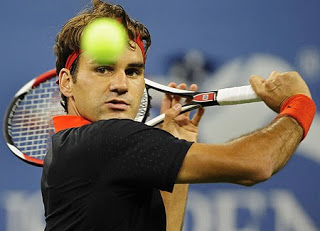
Swiss researchers have concluded that expert tennis players, like their own Roger Federer, have an advantage in certain visual perception skills, while UK scientists have shown how trained animals — and presumably humans — can rely on a superior internal model of motion to predict the path of a fast moving object.

For any sport that involves a moving object, athletes must learn the three levels of response for interceptive timing tasks. 
  • First, there is a basic reaction, also known as optometric reaction (in other words, see it and get out of the way).
  • Next, there is a perceptual reaction, meaning you actually can identify the object coming at you and can put it in some context (for example: That is a tennis ball coming at you and not a bird swooping out of the sky).
  • Finally, there is a cognitive reaction, meaning you know what is coming at you and you have a plan of what to do with it (return the ball with top-spin down the right line).
This cognitive skill is usually sport-specific and learned over years of tactical training. Obviously, professional tennis players are at the expert cognitive stage and have a plan for most shots.

But, in order to reach that cognitive stage, they first need to have excellent optometric and perceptual skills.

Leila Overney and her team at the Brain Mind Institute of Ecole Polytechnique Federale de Lausanne (EPFL) studied whether expert tennis players have better visual perception abilities than other athletes and non-tennis players. Typically, motor skill research compares experts to non-experts and tries to deduce what the experts are doing differently to excel.

They carried out seven visual tests, covering a wide range of perceptual functions including motion and temporal processing, object detection and attention, each requiring the participants to push buttons based on their responses to the computer-based tasks and each related to a particular aspect of visual perception.

In this study, which was detailed in the journal PLOS One, Overney wanted to see if the perceptual skills of the tennis players were not only more advanced than non-tennis players but also other athletes of a similar fitness level, (in this case triathletes), to eliminate any benefits of just being in top physical shape.  To eliminate the cognitive knowledge difference between the groups, she used seven non-sport specific visual tests which measured different forms of perception including motion and temporal processing, object detection and attention. The participants watched the objects on computer screens and pushed buttons per the specific test instructions.

The tennis players showed significant advantages in the speed discrimination and motion detection tests, while they were no better in the other categories.

"Our results suggest that speed processing and temporal processing is often faster and more accurate in tennis players," Overney writes. They even scored better then their peers, the triathletes. "This is precisely why we added the group of triathletes as controls because they train as hard as tennis players but have lower visual processing demands in their sport."

Still, are the tennis players really just relying on their visual advantage when given that half second to react? Have their years of practice created an internal cognitive model that anticipates and predicts the path of an object?

Nadia Cerminara worked on that question. Cerminara, of the University of Bristol (UK), designed an experiment that taught household cats to reach with their paw at a moving target. If they successfully touched the target, they received a food reward.

After training the cats to be successful, she recorded their neuronal activity in their lateral cerebellum. Then, she measured the activity again but would block the vision of the cats for 200-300 milliseconds while performing the task. Despite the lapse in visual information, the neuron firing activity remained the same as before. Cerminara concluded that an internal model had been used to bridge the gap and provide a prediction of where the object was headed.

The study was published in the Journal of Physiology.

So, when faced with a blistering serve, science suggests that players like Federer not only rely on their superior perceptual skills, but also have created an even faster internal simulation of a ball's flight that can help position them for a winning return.

Of course, you may want to avoid the world's fastest server, Andy Roddick, especially when he's upset from a bad line call (see video). :-)


Running Addicts Need Their Fix

Just as there is the endorphin rush of a "runner's high," there can also be the valley of despair when something prevents avid runners from getting their daily fix of miles.

Now, researchers at Tufts University may have confirmed this addiction by showing that an intense running regimen in rats can release brain chemicals that mimic the same sense of euphoria as opiate use. They propose that moderate exercise could be a "substitute drug" for human heroin and morphine addicts.

Given all of the benefits of exercise, many people commit to an active running routine. Somewhere during a longer, more intense run when stored glycogen is depleted, the pituitary gland and the hypothalamus release endorphins that can provide that "second wind" that keeps a runner going.

This sense of being able to run all day is similar to the pain-relieving state that opiates provide, scientists have known. So a team led by Robin Kanarek, professor of psychology at Tufts University, wondered whether they could also produce similar withdrawal symptoms, which would indicate that intense running and opiate abuse have a similar biochemical effect.

Running rodents
The team divided 44 male rats and 40 female rats into four groups. One group was housed inside an exercise wheel, and another group had none. Each group was divided again, either allowing access to food for only one hour per day or for 24 hours per day. Though tests on humans would be needed to confirm this research, rodents are typically good analogues to illuminate how the human body works.
The rodents existed in these environments for several weeks. Finally, all groups were given Naloxone, a drug used to counteract an opiate overdose and produce immediate withdrawal symptoms.

The active rats displayed a significantly higher level of withdrawal symptoms than the inactive rats. Also, the active rats that were only allowed food for one hour per day exercised the most and showed the most intense reaction to Naloxone. This scenario mimics the actions of humans suffering from anorexia athletica, also known as hypergymnasia, that causes an obsession not only with weight but also with continuous exercise to lose weight.

"Exercise, like drugs of abuse, leads to the release of neurotransmitters such as endorphins and dopamine, which are involved with a sense of reward," Kanarek said. "As with food intake and other parts of life, moderation seems to be the key. Exercise, as long as it doesn't interfere with other aspects of one's life, is a good thing with respect to both physical and mental health."

The study appears in the August issue of Behavioral Neuroscience, published by the American Psychological Association.

Treatment ideas
Kanarek hopes to use these results to design treatment programs for heroin and morphine addicts that substitute the all-natural high of exercise in place of the drugs.  "These findings, in conjunction with results of studies demonstrating that intake of drugs of abuse and running activates the endogenous opioid and dopamine reward systems, suggest that it might be possible to substitute drug-taking behavior with naturally rewarding behavior," she writes.

She also wants to do further research on understanding the neurophysiology of extreme eating and exercise disorders. "The high comorbidity of drug abuse and eating disorders provides further evidence of a common neurobiological basis for these disorders," Kanarek concludes.

Usain Bolt Can Be Even Faster, Researchers Claim

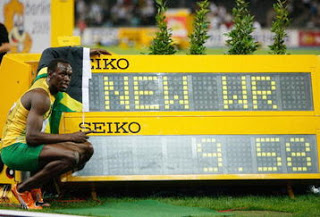
Well, maybe Usain Bolt was right after all.  As discussed in our Physiology of Speed story, Bolt predicted he could run 100 meters in 9.54 seconds, lowering his own world record of 9.69 seconds.

Earlier this week, he almost got there running a 9.58 at the World Championships in Berlin.

Now, researchers from Tilburg University in the Netherlands say he could shave another 3/100ths of a second off and hit the tape at 9.51 seconds.

Using the "extreme value theory", Professor of Statistics John Einmahl and former student Sander Smeets have calculated the fastest possible times for men and women.  Between 1991 and 2008, they chronicled the best times for 762 male sprinters and 469 female sprinters.  They did not trust the data prior to 1991 as possibly being tainted by doping athletes (not that's its gotten much better since then.)

For females, their current world record, set by Florence Griffith-Joyner, of 10.49 seconds could be theoretically lowered to 10.33 seconds.

Extreme value theory is a branch of statistics that tries to predict extreme events such as 100-year floods or major stock market movements that deviate signficantly from the median.  With less statistical confidence (95% confidence), Einmahl estimates the men could get to 9.21 while the women could run a 9.88.

To make this statistical postulating a reality, Bolt needs to find the secret competitive edge that will shave these tenths and hundredths of seconds away. Scientists at the Research Institute of Wildlife Ecology in Austria claim sunflower oil may be the super fuel that is missing.

They found that mice fed a diet high in sunflower oil, which contains n-6 polyunsaturated fatty acids, were 6.3% faster in sprint races against mice fed a diet rich in linseed oil, which is high in n-3 fatty acids.

Their research was presented in June at the Society for Experimental Biology Annual Meeting.

"The results of the current study on mice suggest that moderate differences in dietary n-6/n-3 polyunsaturated fatty acid intake can have a biologically meaningful effect on maximum running speed", says Dr Christopher Turbill, lead researcher. "The application of this research to the performance of elite athletes (specifically those in sports that involve short distance sprints, including cycling) is uncertain, but in my opinion certainly deserves some further attention" he said.

So, a little sunflower oil mixed into the pre-race Gatorade? It might work until world records start to fall and its added to the banned substance list.

The Physiology Of Speed

Usain Bolt, the triple Olympic gold medal sprinter from Jamaica, predicted last week that he could break his own world record of 9.69 seconds in the 100 meter sprint with a time as low as 9.54 seconds.  (8/15 update: he came very close running a 9.58 at the World Championships in Berlin.)

He claimed his coach told him its possible, so he believes him. His coach, Glen Mills, may have just finished reading some new research coming out of Duke University that showed sprinters and swimmers who are taller, heavier but more slender are the ones breaking world records.

At first glance, it may not make sense that bigger athletes would be faster. However, Jordan Charles, a recent engineering grad at Duke, plotted all of the world record holders in the 100 meter sprint and the 100 meter swim since 1900 against their height, weight and a measurement he called "slenderness."

World record sprinters have gained an average of 6.4 inches in height since 1900, while champion swimmers have shot up 4.5 inches, compared to the mere mortal average height gain of 1.9 inches.
During the same time, about 7/10 of a second have been shaved off of the 100-meter sprint while over 14 seconds have come off the 100-meter swim record.

What's going on
Charles applied the "constructal theory" he learned from his mentor Adrian Bejan, a mechanical engineering professor at Duke, that describes how objects move through their environment.

"Anything that moves, or anything that flows, must evolve so that it flows more and more easily," Bejan said. "Nature wants to find a smoother path, to flow more easily, to find a path with less resistance," he said. "The animal design never gets there, but it tries to be the least imperfect that it can be."

Their research is reported in the current online edition of the Journal of Experimental Biology.

For locomotion, a human needs to overcome two forces, gravity and friction. First, an athlete would need to lift his foot off the ground or keep his body at the water line without sinking. Second, air resistance for the sprinter and water resistance for the swimmer will limit speed.

So, the first step is actually weight lifting, which a bigger, stronger athlete will excel at. The second step is to move through the space with the least friction, which emphasizes the new slenderness factor.

By comparing height with a calculated "width" of the athlete, slenderness is a measurement of mass spread out over a long frame. The athlete that can build on more muscle mass over a aerodynamic frame will have the advantage.

The numbers
In swimming, legendary Hawaiian champion Duke Kahanamoku set the world record in 1912 with a time of 61.6 seconds with a calculated slenderness of 7.88. Some 96 years later, Eamon Sullivan lowered the world mark to 47.05 seconds at a slenderness factor of 8.29.

As the athletes’ slenderness factor has risen over the years, the winning times have dropped.  In 1929, Eddie Tolan's world-record 100 meter sprint of 10.4 seconds was achieved with a slenderness factor of 7.61. When Usain Bolt ran 9.69 seconds in the 2008 Olympics, his slenderness was also 8.29 while also being the tallest champion in history at 6-feet 5-inches.

“The trends revealed by our analysis suggest that speed records will continue to be dominated by heavier and taller athletes,” said Charles. “We believe that this is due to the constructal rules of animal locomotion and not the contemporary increase in the average size of humans.”

So, how fast did the original Olympians run? Charles used an anthropology finding for Greek and Roman body mass and plugged it into his formula.

“In antiquity, body weights were roughly 70 percent of what they are today,” Charles said. “Using our theory, a 100-meter dash that is won in 13 seconds would have taken about 14 seconds back then.”
Bolt puts his prediction to the test next month at the track and field world championships in Berlin. One of his main competitors is Asafa Powell, the previous world record holder, who is shorter and has a slenderness factor of 7.85. My money is on the Lightning Bolt.

Cyclists' Sore Seats Signal Serious Symptoms

For any guy who has endured more than thirty minutes on a road bicycle seat, there is usually some concern over the strange numbness that occurs in places that should not go numb. Well, a new study has some good and bad news.

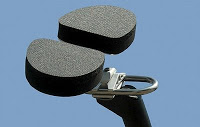
Spanish researchers have found that active male cyclists have lower quality sperm to the point of infertility risk. Among other things, they blame the painful "function over form" design of the wedge bicycle seat.

The good news is that unless you're training to be in the next Tour de France with Lance Armstrong, your time on the saddle shouldn't do any long-term damage.

A team led by professor Diana Vaamonde, from the University of Cordoba Medical School, tracked the workout regimen of 15 Spanish triathletes, with an average age of 33 who had been training for at least eight years, while also monitoring their sperm morphology.

For those in the test group that covered more than 180 miles per week on their bikes, the percentage of normal looking sperm dropped from a group average of 10 percent to 4 percent, a rate where infertility problems begin. Increased swimming or running did not affect sperm quality.

"We found a statistically adverse correlation between sperm morphology and the volume of cycling training undertaken per week," Vaamonde said. "We believe that all the factors inherent in this sports activity, especially with regards to the cycling part, may affect sperm quality," she added. "Moreover, we think that normal physiological homeostasis – the body’s ability to regulate its own environment – may become irreversibly altered, therefore resulting in complex anomalies."

Vaamonde cited three possible reasons for the results: the

increased heat during exercise

, the friction and pressure against the seat causing microtrauma on the testes, and the overall rigor of intense exercise.

The study was released last week in Amsterdam at the annual conference of the European Society of Human Reproduction and Embryology (ESHRE).

The Spanish researchers were following up on research from 2002 that showed similar results for mountain bikers. In that study, Austrian researcher Ferdinand Frauscher tested 40 active (two hours per day) mountain bikers with 30 non-bikers. He found that the bikers had about half the sperm count of the non-bikers. Frauscher explained (as only a medical doctor can) the possible reasons: "The exact causes for the decreased sperm motility are unclear. We believe that repeated mechanical trauma to the testicles results in some degree of vascular damage, and may thereby cause a reduction in sperm motility." Ouch.

For casual bike riders, the risk is still quite low. Allan Pacey, senior lecturer in andrology at the University of Sheffield, told BBC News, "It is important to stress that even if the association between cycling and poor sperm morphology is correct, men training for triathlons are spending much more time in the saddle than the average social cycler or someone who might cycle to and from work."

For those that are still not okay with the "saddle sores," there are always the anatomically correct seats and the padded biker shorts, not to mention recumbent bikes. Beyond that, maybe a nice jog would be better.

Exercise Burns Fat During But Not After Your Workout

After an hour of sweating on the treadmill or pumping iron, most of us look forward to the extra post-exercise "afterburn" of fat cells that has been promised to us by fitness pundits. This 24-hour period of altered metabolism is supposed to help with our overall weight loss.
Unfortunately, a recent study found this to be a myth for moderate exercisers.

The new research clarifies a misunderstanding that exercisers can ignore their diet after a workout because their metabolism is in this super active state. 

"It's not that exercise doesn't burn fat," said Edward Melanson, associate professor of medicine at the University of Colorado, "It's just that we replace the calories. People think they have a license to eat whatever they want, and our research shows that is definitely not the case. You can easily undo what you set out to do.”

The findings were detailed in the April edition of Exercise and Sport Sciences Review.

What does happen
Melanson and his team set out to measure whether people were able to burn more calories for the 24 hours after a workout compared to a day with no exercise. Their test groups, totaling 65 volunteers, included a mix of lean vs. obese and active vs. sedentary people.

On exercise days, they rode stationary bikes until they had burned 400 calories. Their pre and post exercise diet was controlled.

Throughout the groups, there was no difference in the amount of fat burned in the 24-hour period either with or without exercise.  Of course, during the exercise plenty of calories were being burned and that's the formula that Melanson would like us to remember.  "If you are using exercise to lose body weight or body fat, you have to consider how many calories you are expending and how many you are taking in," Melanson recently told WebMd. The daily energy balance or "calories in vs. calories out" is the most reliable equation for long-term weight loss.

While the current research focused on the moderate activity levels of most people, the researchers admitted they still need to examine the effect of higher intensity workouts and multiple consecutive days of exercise.

They are clear on their current message. "We suggest that it is time to put the myth that low intensity exercise promotes a greater fat burn to rest," Melanson writes. "Clearly, exercise intensity does not have an effect on daily fat balance, if intake is unchanged."

Type of workout
So, how about a weight resistance training program mixed in with cardio work?  Another fitness industry claim is that more muscle mass on your frame will raise your metabolism rate, even while sitting on the couch.

The same study, using the same test groups, found the post-exercise rate of calorie burn did not change on days of lifting versus no lifting. It is true that a pound of muscle burns seven to ten calories per day versus only two calories per day for a pound of fat. However, the average adult just doesn't put on enough lean muscle mass to make this difference significant.

While this research dispels one myth about exercise, there is still overwhelming evidence of the benefits of movement when combined with your eating habits. So, before eating that double cheeseburger and fries, you might want to do some math to figure out how many stairs you'll have to climb to break even.

Please visit my other sports science articles at Livescience.com

Kids' Baseball Injuries Down But Some Still Play "Until It Hurts"

At a recent baseball game, the 12-year-old second baseman on my son's team had a ground ball take a nasty hop, hitting him just next to his right eye. He was down on the field for several minutes and was later diagnosed at the hospital with a concussion.

Thankfully, acute baseball injuries like this are on the decline, according to a new report. However, several leading physicians say overuse injuries of young players caused by too much baseball show no signs of slowing down.

Our unlucky infielder's hospital injury report may become part of a national database called the National Electronic Injury Surveillance System (NEISS), part of the U.S. Consumer Product Safety Commission. It monitors 98 hospitals across the country for reports on all types of injuries.

Bradley Lawson, Dawn Comstock and Gary Smith of Ohio State University filtered this data to find just baseball-related injuries to kids under 18 from 1994-2006.

During that period, they found that more than 1.5 million young players were treated in hospital emergency rooms, with the most common injury being, you guessed it, being hit by the ball, and typically in the face.

The good news is that the annual number of baseball injuries has decreased by 24.9 percent over those 13 years. The researchers credit the decline to the increased use of protective equipment.

"Safety equipment such as age-appropriate breakaway bases, helmets with properly-fitted face shields, mouth guards and reduced-impact safety baseballs have all been shown to reduce injuries," Smith said. "As more youth leagues, coaches and parents ensure the use of these types of safety equipment in both practices and games, the number of baseball-related injuries should continue to decrease. Mouth guards, in particular, should be more widely used in youth baseball."

Their research is detailed in the latest edition of the journal Pediatrics.

The bad news is ...
 
While accident-related injuries are down, preventable injuries from overuse still seem to be a problem, according to author Mark Hyman. In his recent book, "Until It Hurts," Hyman admits his own mistakes in pressuring his 14-year-old son to continue pitching with a sore arm, causing further injury.

Surprised by his own unwillingness to listen to reason, Hyman, a long-time journalist, researched the growing trend of high-pressure parents pushing their young athletes too far, too fast.

"Many of the physicians I spoke with told me of a spike in overuse injuries they had witnessed," Hyman told Livescience. "As youth sports become increasingly competitive — climbing a ladder to elite teams, college scholarships, parental prestige and so on — children are engaging in a range of risky behaviors."

One expert he consulted was Dr. Lyle Micheli, founder of one of the country's first pediatric sports medicine clinics at Children's Hospital in Boston. Micheli estimates that 75 percent of the young patients he sees are suffering from some sort of overuse injury, versus 20 percent back in the 1990s.

"As a medical society, we've been pretty ineffective dealing with this," Micheli said. "Nothing seems to be working."

Young surgeries

In severe overuse cases for baseball pitchers, the end result may be ulnar collateral ligament surgery, better known as "Tommy John" surgery. Dr. James Andrews, known for performing this surgery on many professional players, has noticed an alarming trend in his practice. Andrews told The Oregonian last month that more than one-quarter of his 853 patients in the past six years were at the high school level or younger, including one 7-year-old.

Last spring, Andrews and his colleagues conducted a study comparing 95 high-school pitchers who required surgical repair of either their elbow or shoulder with 45 pitchers that did not suffer injury.

They found that those who pitched for more than eight months per year were 500 percent more likely to be injured, while those who pitched more than 80 pitches per game increased their injury risk by 400 percent.  Pitchers who continued pitching despite having arm fatigue were an incredible 3,600 percent more likely to do serious damage to their arm.

Hyman encourages parents to keep youth sports in perspective. "I think that, generally, parents view sports as a healthy and wholesome activity. That's a positive. But, we live in hyper-competitive culture, and parents like to see their kids competing," he said. "It's not only sports. It's ballet and violin and SAT scores and a host of other things.  It's in our DNA."

Please visit my other sports science articles at Livescience.com.