How Should Cheating Be Defined In Sports?
/
When Milwaukee Brewers pitcher Chris Capuano reports for spring training in April, he will be anxious to demonstrate the effects of a performance-enhancing off-season. His brain will benefit from a sharper focus while his throwing arm will boast an extra boost that has been missing since 2006. Stimulants? Steroids? Scandal? No need to panic, he just had LASIK surgery for his eyes and "Tommy John" surgery for his injured elbow. Of course, had he chosen amphetamines to improve his focus or steroids to increase his strength, he would have been banned and berated.
Society Decides
Society Decides
There is confusion over the means and methods athletes have available to enhance their performance. Certainly, corrective eye surgery to raise your vision level to 20/20 seems fair, but many athletes go into the procedure hoping to come out with enhanced 20/15 or 20/10 eyesight. Replacing a damaged elbow ligament with a tendon doesn't seem like cheating, but what if its done on a healthy elbow hoping for a few more miles per hour on a fastball that has faded over the years?
Earlier this month, a commentary in the journal Nature recommended a fresh look at cognitive-enhancing drugs and where to draw the line in the sand between natural performance and enhanced performance. The authors, an esteemed group of neuroscientists and ethicists, argued that "enhanced" is only defined by the rules set by society.
Earlier this month, a commentary in the journal Nature recommended a fresh look at cognitive-enhancing drugs and where to draw the line in the sand between natural performance and enhanced performance. The authors, an esteemed group of neuroscientists and ethicists, argued that "enhanced" is only defined by the rules set by society.
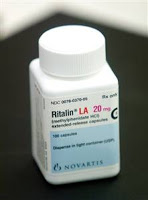 Certainly, abuse of prescription drugs, such as Ritalin and Adderall, is illegal because of the potential, harmful side effects. Still, reports of the rising use of these drugs by college students and professionals show the demand for options beyond nutrition, exercise and sleep.
These drugs are just the first generation of possible brain boosting supplements, which is why the Nature commentators are calling for an organized, stigma-free approach to evaluating the risks, benefits and ethics of future products.
Even in Major League Baseball, there is mounting evidence that cognitive-enhancing drugs may be on the rise. Since MLB banned amphetamines in 2006, there has been a dramatic rise in the number of therapeutic use exemptions issued to players for attention-deficit disorder diagnoses, for which drugs like Ritalin and Adderall can be legitimately prescribed. In 2006, 28 players applied for the exemption, while a year later there were 103. There is suspicion that many of these ADD diagnoses are just excuses to get the pills.
Legal Jolt
So, what if there was a cognitive-enhancing, sports supplement that increased alertness, concentration, reaction time and focus while also decreasing the perception of muscle fatigue? Even more encouraging, this supplement is sold in millions of outlets and is socially accepted worldwide. It comes in three sizes, tall, grande or venti – coffee. More specifically, caffeine has been the subject of many recent studies of its effectiveness, both cognitively and physiologically.
Earlier this year, Dr. Carrie Ruxton completed a literature survey to summarize 41 double-blind, placebo-controlled trials published over the past 15 years to establish what range of caffeine consumption would maximize benefits and minimize risk for cognitive function, mood, physical performance and hydration. The studies were divided into two categories, those that looked at the cognitive effects and those that looked at physical performance effects.
Even in Major League Baseball, there is mounting evidence that cognitive-enhancing drugs may be on the rise. Since MLB banned amphetamines in 2006, there has been a dramatic rise in the number of therapeutic use exemptions issued to players for attention-deficit disorder diagnoses, for which drugs like Ritalin and Adderall can be legitimately prescribed. In 2006, 28 players applied for the exemption, while a year later there were 103. There is suspicion that many of these ADD diagnoses are just excuses to get the pills.
Legal Jolt
So, what if there was a cognitive-enhancing, sports supplement that increased alertness, concentration, reaction time and focus while also decreasing the perception of muscle fatigue? Even more encouraging, this supplement is sold in millions of outlets and is socially accepted worldwide. It comes in three sizes, tall, grande or venti – coffee. More specifically, caffeine has been the subject of many recent studies of its effectiveness, both cognitively and physiologically.
Earlier this year, Dr. Carrie Ruxton completed a literature survey to summarize 41 double-blind, placebo-controlled trials published over the past 15 years to establish what range of caffeine consumption would maximize benefits and minimize risk for cognitive function, mood, physical performance and hydration. The studies were divided into two categories, those that looked at the cognitive effects and those that looked at physical performance effects.
 The results concluded that there was a significant improvement in cognitive functions like attention, reaction time and mental processing as well as physical benefits described as increased "time to exhaustion" and decreased "perception of fatigue" in cycling and running tests.
Given these results, how exactly does caffeine perform these wonderful tricks? Dr. Ruxton explains from the study, "Caffeine is believed to impact on mood and performance by inhibiting the binding of both adenosine and benzodiazepine receptor ligands to brain membranes. As these neurotransmitters are known to slow down brain activity, a blockade of their receptors lessens this effect."
Bottom line, the chemicals in your brain that would cause you to feel tired are blocked, giving you a feeling of ongoing alertness. This pharmacological process is very similar to that of the ADD drugs.
If caffeine is such a clear cut performance enhancing supplement, why did the World Anti-Doping Agency (WADA) first add caffeine to its banned substance list, only to remove it in 2004? At the time that it was placed on the banned list, the threshold for a positive caffeine test was set to a post-exercise urinary caffeine concentration of about 3-4 cups of strong coffee.
However, more recent research has shown that caffeine has ergogenic effects at levels as low as the equivalent of 1-2 cups of coffee. So, it was hard for WADA to know where to draw the line between athletes just having a few morning cups of coffee/tea and those that were intentionally consuming caffeine to increase their performance level. If caffeine is such a clear cut performance enhancing supplement, why did the World Anti-Doping Agency (WADA) first add caffeine to its banned substance list, only to remove it in 2004? At the time that it was placed on the banned list, the threshold for a positive caffeine test was set to a post-exercise urinary caffeine concentration of about 3-4 cups of strong coffee.
So, if Chris Capuano has a double espresso before pitching, his brain, eyes and arm should enhance his performance in the game. Is that an unfair advantage? Science will continue to offer new and improved methods for raising an athlete's game above the competition. Players, league officials and fans will have to decide where to draw the line.
Please visit my other articles on Livescience.com