The 10,000 hour theory has become the American dream for developing athletes. Just work hard enough and your gold medal, Hall of Fame, championship ambitions can come true. It is achievable, measurable and finite. However, many athletes never quite cross the 10,000 hour finish line, and have used the scapegoat reason, “I just didn’t have enough time to commit to the sport.” Now, recent research suggests that while 10,000 hours of deliberate practice may be necessary to achieve world-class status, it may not be the only ingredient to success. Celebrating its 20th anniversary this year, a research paper by Florida State professor K. Anders Ericsson, The Role of Deliberate Practice in the Acquisition of Expert Performance, has been cited in the scientific press over one thousand times earning its own HOF credentials. The gist of it is that Ericsson visited a West Berlin music academy and interviewed violin students and their teachers. First, he asked the students to estimate the number of structured practice hours they had endured up to age 20. Then, he asked their teachers to divide the class into good, better and best thirds. The correlation uncovered showed that the best students had accumulated, on average, over 10,000 hours of practice while the middle group was at about 8,000 hours and the bottom group had not reached 5,000 hours.
After checking this relationship within other groups of skilled experts, Ericsson found similar patterns of 10,000 hours of practice and concluded that innate talent or “what we’re born with” had little to do with becoming an expert in any field, even sports. With that declaration, the dream (and the practice odometer) was launched.
However, since that landmark 1993 paper, other researchers have been finding exceptions to the rule; some experts were crowned with only 3,000 hours of practice while others still had not reached the mountaintop even though they had doubled the 10,000 hour mark.
David Hambrick, associate professor of psychology at Michigan State, has been searching for the other necessary ingredients for several years. In 2011, he and his colleague Elizabeth J. Meinz found that deliberate practice among pianists did account for almost half of the variance between experts and novices. But in their quest to find out what else mattered to make up the other 50% of variance, they found that working memory capacity, the ability to remember a set of objects while engaged in another task, was also a significant determinant of success.
This month, Hambrick and his team released new research that looked at 14 different studies of chess and music students to find other clues to expertise. Again, they were convinced that deliberate practice alone was not enough.
“The evidence is quite clear,” he writes, “that some people do reach an elite level of performance without copious practice, while other people fail to do so despite copious practice.”
Across those chess and music studies, they found that practice explained about one third of the journey to being world class. One new factor that did emerge was starting at a young age. Logically, someone who started training at age 7 versus 12 would have five more years of practice, but Hambrick found that even when total hours of practice were comparable, the student that started at an earlier age became more accomplished. “This evidence suggests that there may be a critical period for acquiring complex skills just as there may be for acquiring language,” he concluded.
Also, overall intelligence did make a difference, at least for these chess and music students. Those students with a higher tested IQ, including working memory capacity, were also more likely to end up being experts.
Finally, grit, a determined attitude to succeed, also played a role in creating success. The term has been made famous by Paul Tough in his book How Children Succeed, based on the research of psychologist Angela Duckworth (see TED talk below). The desire and passion to get better drives the willingness to spend so many hours practicing a skill.
So, what does all of this mean for the aspiring superstar? That practice, as much as possible, is still a necessary evil to getting better at a sport. However, it also confirms that different athletes have different qualities and progress through their journey at different paces. They may need some guidance based on their individual strengths that will help them find the right sport.
“If people are given an accurate assessment of their abilities and the likelihood of achieving certain goals given those abilities,” Hambrick predicted, “they may gravitate toward domains in which they have a realistic chance of becoming an expert through deliberate practice.”
As the old saying goes, “you can’t coach height”, but, according to researchers at the University of South Australia, you can recruit and develop key skills beyond genetic gifts. That was their conclusion after interviewing 90 elite basketball coaches from around the world, including men and women from major college programs and professional teams from the NCAA, NBA, WNBA, and 10 other international leagues.
"Game statistics are commonly used to recruit basketball players but by watching players on the court, and how they behave outside of it, coaches can pick up a lot of non-physical factors that indicate whether a player is likely to make the grade,” said Michael Rogers, a PhD student in the university’s Allied Health and Human Performance program and lead author of the study.
With team training now resume for many leagues around the world, athletes are increasing their physical fitness levels back up to in-season form. Well-known data metrics, like heart rate, speed, and power, are being uploaded and summarized by performance trainers and scrutinized by coaches. But, mentally, where is the team at? Are they cognitively as sharp as they were two months ago? Are they thinking about family members or friends? How has this new pattern of living affected their brain?
Of course, team psychologists will have discussions with players, when needed, to address any concerns that they bring forward. Yet, it would benefit players and the team if there was a standardized framework for assessing their overall readiness to endure the battle on the field, in other words, their cognitive fitness. On top of physical capabilities, the variables of anticipation, awareness, perception and decision-making often determine the outcome of a game.
Because we all need one more reason to get off the couch and on the treadmill or the empty trail while we work from home, researchers at the University of California, Davis have found that the neurotransmitters in our brains actually switch into a hyper-learning mode after aerobic exercise.
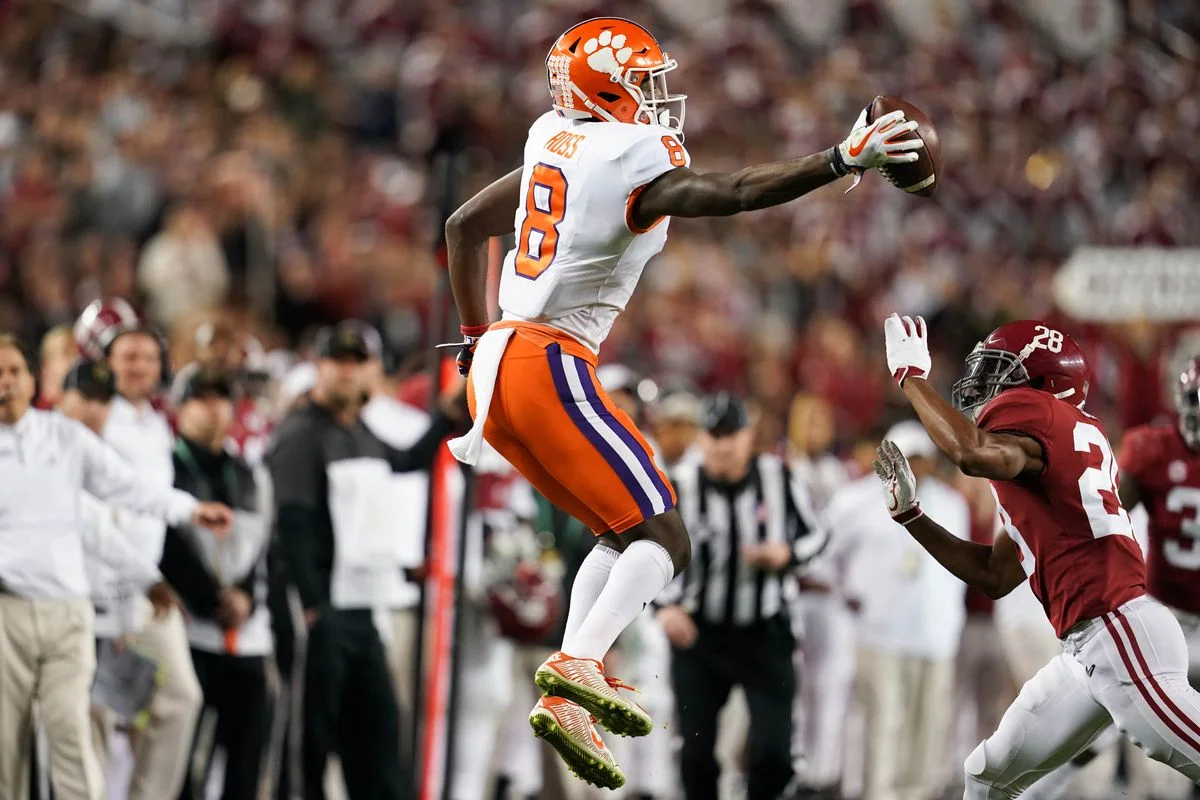
n the 2019 College Football Playoff National Championship game, two true freshmen, quarterback Trevor Lawrence and wide receiver Justyn Ross, made a startling statement as they dominated the defending champion Alabama Crimson Tide. The Lawrence to Ross connection produced 6 catches for 153 yards, including a game-breaking 74-yard touchdown pass and a one-handed circus catch for a late, crucial first down. Two 19-year-olds, one 6 feet, 6 inches and the other 6’ 4”, outplayed one of the best defensive units in the country.
In our latest book, we featured the rise of Justyn Ross and his ironic results at Nike’s “The Opening” competition for high school football stars. Despite the speed and athleticism that Ross displayed in the national championship game, he has another, defining quality that doesn’t show up in the SPARQ ratings - he’s a Playmaker.
The double-edged sword of respect and expectation that comes with the number 10 jersey is reserved for the shoulders of a player that can handle the weight. So when Jürgen Klinsmann, former U.S. Men’s National Team head coach, handed it to seventeen-year-old Christian Pulisic before a 2016 World Cup qualifier game, he knew the load that was being placed on the young playmaker. “The No. 10 has a meaning,” Klinsmann said. “Ask him now how he feels with that heavy number on his back.”
That night, Pulisic responded brilliantly, scoring two goals and assisting on a third in just twenty-six minutes, making him the youngest U.S. player ever to score in a World Cup qualifier. Even Bruce Arena, who’s seen his share of promising prospects in his forty years of coaching at the college, pro, and national team levels, believes in Pulisic. “I think he is just a natural,” said Arena. “The game’s easy for him. He’s got exceptional skill, vision, he’s pretty smooth.” Wary of anointing him a savior too early, Arena did inch out on a limb when pressed: “It makes you think that this is going to be perhaps the first American superstar in the sport. You have to be hesitant about this but this is a very talented young man.”
For those baseball hitters who can do the former, the latter comes much easier. Seeing, identifying and selecting which pitch to swing at is a combination of visual perception, brain processing and motor skill execution. Sure, the physics of hitting a baseball, measured by things called launch angle and exit velocity, determine the trajectory and distance of a batted ball. But it’s that pre-contact decision making process that gets hitters on base so they can score runs and win games. Just as bat speed, leg drive and arm strength define the distance of a hit, the purely cognitive skills of perception, information processing and hand-eye coordination pick out the best pitch to hit and, more importantly, which pitch to avoid.
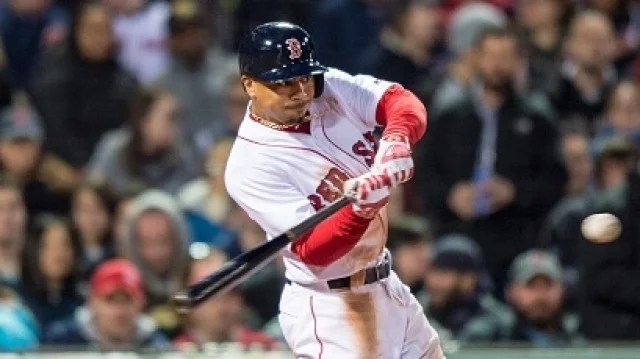
And when you’re 5 feet, 9 inches tall, you rely on those brain skills much more than physical dominance to stay up in the big leagues. That’s exactly what Mookie Betts, right fielder for the 2018 World Champion Boston Red Sox, has done over his young four-season career. Sure, he won the AL batting title this year with a .346 batting average, but he also had a league high slugging percentage, with 32 home runs and 80 RBIs.
Substituting brain for brawn, Betts excels in a category of baseball analytics known as plate discipline, in other words, picking the right pitch to swing at and then making contact with that swing. In the pre-swing decision-making process, hitters with good plate discipline swing at pitches in the strike zone, not out of it. When they do decide to swing, they make contact more often with better hand-eye coordination.
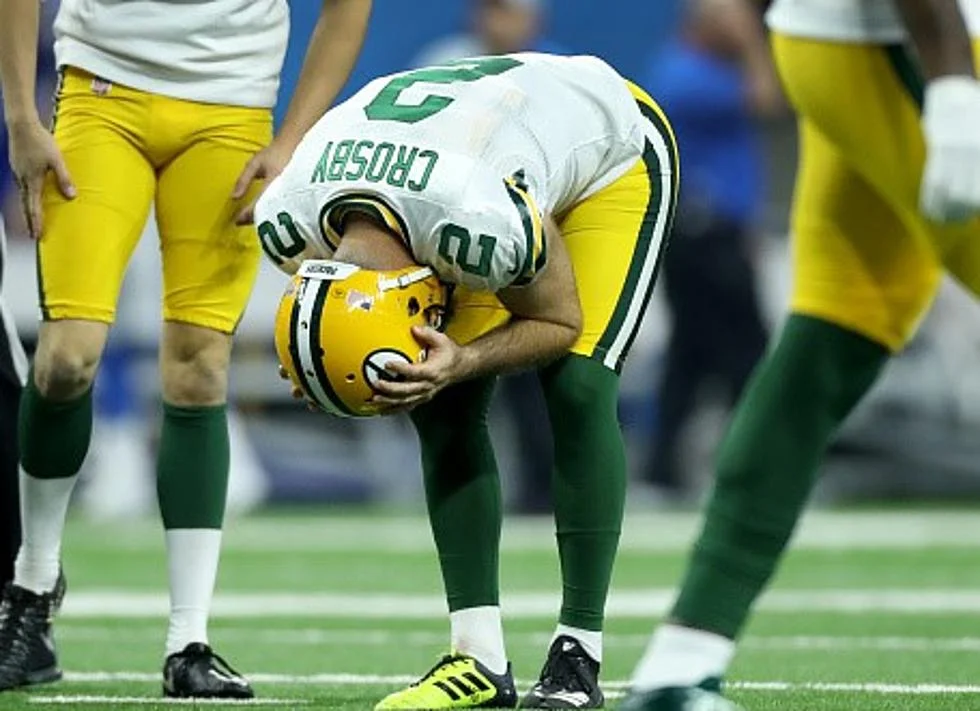
“I’ve done this a long time and I’ve never had a game like that. This is uncharted territory.” To be sure, it was one of Mason Crosby’s worse games of his 12-year NFL kicking career, missing four out of five field goals and an extra point. In his last five full seasons, the Green Bay Packers kicker has made an average of 85% of his field goals, so his week 5 game, a 31-23 loss to the Detroit Lions, was more than a statistical anomaly. Missing wide from 42, 41, 38 and 56 yards, Crosby was at a loss to explain his sudden inaccuracy, “Every attempt I felt like I was in rhythm going through it,” said Crosby. “It was one of those days that just wasn’t there. I’ve done this a long time, and I’ve never had a day where it wasn’t there like that.”
These pre-game preparations are certainly important for warming up the arms and legs, getting the heart rate up and loosening up muscles. But maybe more importantly, this skill repetition also gets the brain ready for the hundreds of actions it will need to perform soon after.