Ask any NBA player or coach where they would prefer to play a high
stakes game, home or away, and the vast majority will choose being in
the friendly confines of their home arena. Overall, the win-loss
records of most teams would support that, but they would do even better
if they taught their home fans a lesson in performance psychology. When it comes to sports skills, research has shown that we’re better
off to just do it rather than consciously thinking about the mechanics
of each sub-component of the move. Waiting for a pitch, standing over a
putt or stepping up to the free throw line gives our brains too much
opportunity to start breaking down the task. Add competitive pressure
brought on by a close game watched by a loyal home fans and we can
easily slip out of the well-practiced mental map, known as automaticity,
that usually gets the job done. But what about elite athletes who are the best in the game? Surely,
they’ve found ways to handle pressure and keep their brains on
auto-pilot without getting an online psychology degree? Actually no, says researchers Matt Goldman and Justin Rao.
In a study presented at the recent Sloan Sports Analytics Conference, they revealed an interesting paradox; playing in front of a home crowd can be both a benefit and a curse for NBA players. For most of a basketball game, players are in constant motion
reacting to their teammates and opponents. They have very little time
for “self-focus” or thinking too much about the dozens of small
movements that make up their motor skills, except for one event – the
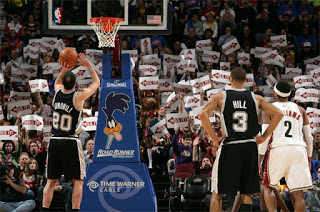
free throw. After being fouled while taking a shot, the play comes to a
halt. The aggrieved player stands at the free throw line, fifteen feet
from the basket, with the other nine players as well as thousands of
fans staring at him. The crowd, thinking they’re doing him a favor, gets eerily quiet.
The pressure builds as he’s allowed to remember the score of the game,
how much time is left and the disappointment that he and almost everyone
else there will feel if he misses this shot. To counter this, he
starts running through his mental checklist; find a focus point, keep
your elbow in, bend your knees, follow-through. Bringing all of these
pieces into his conscious mind will most likely cause him to miss the
shot, only adding more pressure if he’s fouled again. Goldman and Rao compared the stage fright of shooting free throws
with another very common basketball skill, offensive rebounding.
Recovering the ball after a missed shot is vital to a team’s chances of
winning since it provides another possession opportunity to score.
It’s also a task that is done in the constant motion of the game with
the crowd cheering. There is no time to self-reflect on the skill
components of rebounding, it just happens. If a player does not get a
rebound, there is no obvious public shame as the play immediately
continues. So, could playing in front of a home crowd affect one part a player’s game but not another? Using detailed play by play data from every NBA game from 2005-2010
(six full seasons), including 1.3 million possessions and 300,000 free
throw attempts, they first found an expected result that, in general,
home team players have a higher overall free throw shooting percentage
than the visitors. However, Goldman and Rao then looked at what happens
in clutch situations, which they define, in a detailed mathematical
formula, as being late in the game when the score is close. In those
high pressure moments, the home team does significantly worse at the
charity stripe than their opponents. They blame this mostly on the
actions of the fans. To go from constant noise and fast action to
perfect quiet and stillness is enough to take even the best basketball
players in the world out of their rhythm and into a damaging self-talk
state. At the other end of the court, when visiting players are taking free
throws, the crowd, again thinking they’re helping, goes crazy with
waving arms, signs and noise. However, the data showed that the free
throw percentages of the visitors in clutch situations remains unchanged
from their normal away percentage. The researchers argue that the
distractions actually help the opponents at the line by not allowing
them to think about their complicated motor skills. To show that the pressure doesn’t affect all skills, the stats also
showed that the home team’s offensive rebounds got progressively better
in clutch situations supporting the theory that positive support can
increase effort. As with free throws, the visiting team’s clutch
performance in rebounding was unchanged from normal game situations. Not all players are created equal. The study called out a few NBA
players as being either clutch at the free throw line or chokers under
pressure, including two of the game’s top stars. Manu Ginobili of the
San Antonio Spurs, who has a career 83% free throw percentage, is the
player you most want at the line when the game is close. On the other
hand, Paul Pierce of the Boston Celtcs, with an 80% career percentage,
was the second worst free throw shooter in clutch situations. Maybe a few brave Celtic fans at the Garden can begin to reverse the
trend and go crazy when Pierce is at the line. Just be sure to be near
an exit. Visit my new home at Axon Sports on Twitter and Facebook.
To reach the NBA Finals, Russell Westbrook of the Oklahoma City Thunder needs to pass more, especially to his teammate Kevin Durant. That would be the message that two researchers would send to Thunder coach, Scott Brooks, if given the chance. Matt Goldman, a graduate student at the University of California, San Diego, and Justin Rao, a research scientist at Yahoo Labs recently named Westbrook as the biggest “chucker” in the NBA because of statistics showing that he shoots much more often than he should, while Durant is classified as an undershooter, whose team would benefit from him taking more chances.
While their statistical theory builds a case for how to achieve optimal efficiency on the court, they don’t explain why elite players make the in-game decisions that they do. For that matter, what about the high school ball player or the weekend warrior at the gym; how do they make the decision to pass or shoot? For that, Markus Raab and Joseph Johnson, both sport scientists, have some insights from their research.
First, let’s do the numbers. Goldman and Rao dug into the NBA stats archive to analyze over 400,000 team possessions over the last four seasons, 2006-2010, across the entire league. In a paper and presentation at the recent MIT Sloan Sports Analytics Conference, they presented a model that compares the difficulty of a shot taken in relation to the time remaining on the 24 second shot clock. Then they compare this with a concept called “allocative efficiency”, or the benefit of equally distributing the ball to any of the five players on the court and also “dynamic efficiency”, or deciding whether to “use” the possession by taking a shot or “continuing” the possession by making a pass. As the shot clock winds down, the marginal difficulty of a shot considered will need to rise or they risk getting no shot off before the 24 seconds expires, wasting the possession.
They found that most NBA players are very efficient in their shot selection. Surprisingly, several elite players are actually not shooting enough, according to their model. Here is the list of all NBA players analyzed and their score, where a negative number (at the top of the list) represent overshooters. Joining Westbrook at the top of the list were well-known names like Lamar Odom and Tracy McGrady. Even bigger names like LeBron James, Ray Allen, Dirk Nowitzki, Chris Paul and Joe Johnson actually show up at the bottom of the list and may hurt their team with their unselfishness.
So, what goes on in these very well-paid athletic brains? Are the trigger-happy players selfish, over-confident and in need of attention? Markus Raab, professor at the German Sport University-Cologne, and Joseph Johnson, professor at Miami University of Ohio, have spent the last ten years studying the decision-making processes of athletes in several different sports, but especially fast-paced games where quick decisions are critical.
Let’s imagine the Thunder point guard, Westbrook, bringing the ball up the floor. He crosses the half court line and his decision making process kicks in. The Raab/Johnson process first recognizes that perception of the situation is required before the player can generate all of the different options in his brain. Just like a quarterback examining and identifying the defensive alignment as he breaks the huddle, the point guard in basketball has to visually process the scene in front of him. From there, his brain, based on his vast memory of similar basketball experiences, begins to make a list of options. These can be spatial options, like move the ball left, ahead or right, or functional options like pass or shoot.
Through research with basketball and team handball players, the researchers found that the most effective strategy is to “take the first” option that the player conceives as that is most often the “correct” choice when analyzed later by experts. Much like going with your first answer on a test, the more that you deliberate over other choices, the greater the chances that you’ll pick the wrong one.
However, each player will have their own library of choices stored in their memory and this magical sorting of best options can be influenced by several unique variables.
One of these pre-determined factors is a personality preference known as action vs. state orientation. According to Raab, “An action orientation is attributed to players if they concentrate on a specific goal and take risks, whereas a state orientation is attributed to players if they have non-task-relevant cognitions and reduce risk-taking behavior by considering more situative considerations and future behavioral consequences.” In other words, someone who has an action mentality is more likely to shoot first and ask questions later, while a state oriented player is going to consider more options with more long-term outlook.
For this and similar experiments, Raab and Johnson showed first-person videos of many different basketball in-game scenarios to players of different skill levels and personality types, then froze the scene and asked them to make a quick decision of what to do next with the ball. They recorded the decision and the time it took to make the decision. They found that those players who have more of an action orientation, according to a personality test given prior to the drill, were more likely to shoot first and more quickly. Clearly, Russell Westbrook must fall in this category.
Raab followed up this study with a similar one that measured the difference between intuition-based decisions and more cognitive, deliberate decisions. A player who “goes with his gut” was shown to make faster and more successful choices than one that over analyzes. This may help explain the list of elite players who tend to pass more than shoot. They have more experience and patience to rely on their intuitive feel for the game. While Goldman and Rao may ask them to be more action oriented, these players have learned that they are often just one more pass away from a much higher percentage shot.
Certainly, this is the tip of the iceberg regarding the psyche of a player at any level. There are many more variables, some fact-based (I’ve missed my last 5 shots, so I’m going to pass) while some are more emotional, (I don’t want my teammate to get all the glory.) For now, Thunder fans can only hope that their point guard learns to share.
As the old saying goes, “you can’t coach height”, but, according to researchers at the University of South Australia, you can recruit and develop key skills beyond genetic gifts. That was their conclusion after interviewing 90 elite basketball coaches from around the world, including men and women from major college programs and professional teams from the NCAA, NBA, WNBA, and 10 other international leagues.
"Game statistics are commonly used to recruit basketball players but by watching players on the court, and how they behave outside of it, coaches can pick up a lot of non-physical factors that indicate whether a player is likely to make the grade,” said Michael Rogers, a PhD student in the university’s Allied Health and Human Performance program and lead author of the study.
With team training now resume for many leagues around the world, athletes are increasing their physical fitness levels back up to in-season form. Well-known data metrics, like heart rate, speed, and power, are being uploaded and summarized by performance trainers and scrutinized by coaches. But, mentally, where is the team at? Are they cognitively as sharp as they were two months ago? Are they thinking about family members or friends? How has this new pattern of living affected their brain?
Of course, team psychologists will have discussions with players, when needed, to address any concerns that they bring forward. Yet, it would benefit players and the team if there was a standardized framework for assessing their overall readiness to endure the battle on the field, in other words, their cognitive fitness. On top of physical capabilities, the variables of anticipation, awareness, perception and decision-making often determine the outcome of a game.
Because we all need one more reason to get off the couch and on the treadmill or the empty trail while we work from home, researchers at the University of California, Davis have found that the neurotransmitters in our brains actually switch into a hyper-learning mode after aerobic exercise.
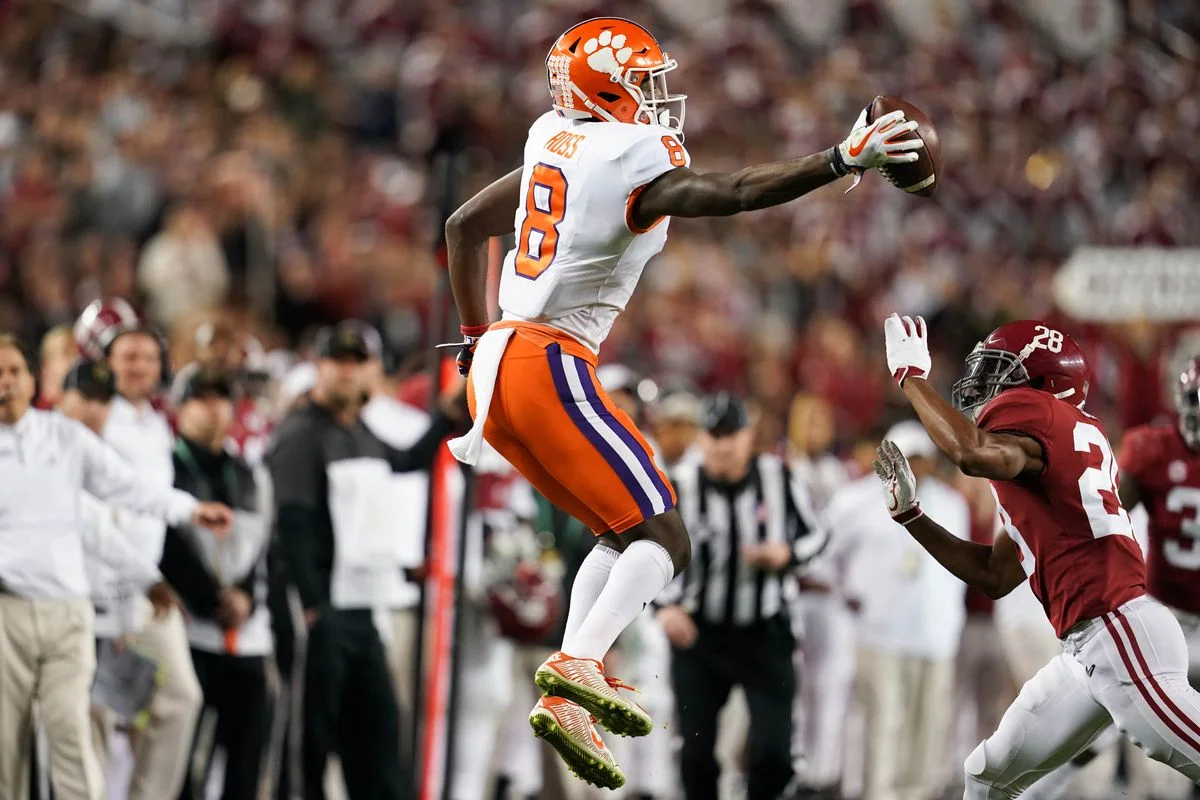
n the 2019 College Football Playoff National Championship game, two true freshmen, quarterback Trevor Lawrence and wide receiver Justyn Ross, made a startling statement as they dominated the defending champion Alabama Crimson Tide. The Lawrence to Ross connection produced 6 catches for 153 yards, including a game-breaking 74-yard touchdown pass and a one-handed circus catch for a late, crucial first down. Two 19-year-olds, one 6 feet, 6 inches and the other 6’ 4”, outplayed one of the best defensive units in the country.
In our latest book, we featured the rise of Justyn Ross and his ironic results at Nike’s “The Opening” competition for high school football stars. Despite the speed and athleticism that Ross displayed in the national championship game, he has another, defining quality that doesn’t show up in the SPARQ ratings - he’s a Playmaker.
The double-edged sword of respect and expectation that comes with the number 10 jersey is reserved for the shoulders of a player that can handle the weight. So when Jürgen Klinsmann, former U.S. Men’s National Team head coach, handed it to seventeen-year-old Christian Pulisic before a 2016 World Cup qualifier game, he knew the load that was being placed on the young playmaker. “The No. 10 has a meaning,” Klinsmann said. “Ask him now how he feels with that heavy number on his back.”
That night, Pulisic responded brilliantly, scoring two goals and assisting on a third in just twenty-six minutes, making him the youngest U.S. player ever to score in a World Cup qualifier. Even Bruce Arena, who’s seen his share of promising prospects in his forty years of coaching at the college, pro, and national team levels, believes in Pulisic. “I think he is just a natural,” said Arena. “The game’s easy for him. He’s got exceptional skill, vision, he’s pretty smooth.” Wary of anointing him a savior too early, Arena did inch out on a limb when pressed: “It makes you think that this is going to be perhaps the first American superstar in the sport. You have to be hesitant about this but this is a very talented young man.”
For those baseball hitters who can do the former, the latter comes much easier. Seeing, identifying and selecting which pitch to swing at is a combination of visual perception, brain processing and motor skill execution. Sure, the physics of hitting a baseball, measured by things called launch angle and exit velocity, determine the trajectory and distance of a batted ball. But it’s that pre-contact decision making process that gets hitters on base so they can score runs and win games. Just as bat speed, leg drive and arm strength define the distance of a hit, the purely cognitive skills of perception, information processing and hand-eye coordination pick out the best pitch to hit and, more importantly, which pitch to avoid.
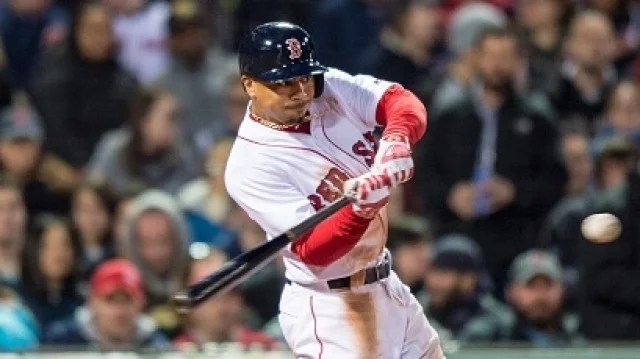
And when you’re 5 feet, 9 inches tall, you rely on those brain skills much more than physical dominance to stay up in the big leagues. That’s exactly what Mookie Betts, right fielder for the 2018 World Champion Boston Red Sox, has done over his young four-season career. Sure, he won the AL batting title this year with a .346 batting average, but he also had a league high slugging percentage, with 32 home runs and 80 RBIs.
Substituting brain for brawn, Betts excels in a category of baseball analytics known as plate discipline, in other words, picking the right pitch to swing at and then making contact with that swing. In the pre-swing decision-making process, hitters with good plate discipline swing at pitches in the strike zone, not out of it. When they do decide to swing, they make contact more often with better hand-eye coordination.
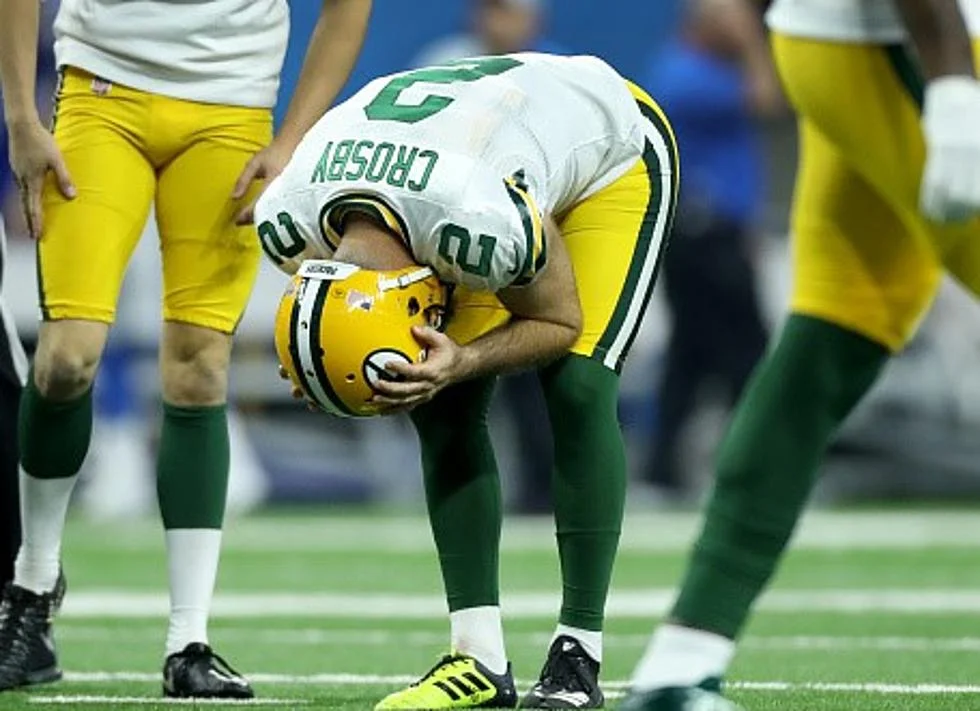
“I’ve done this a long time and I’ve never had a game like that. This is uncharted territory.” To be sure, it was one of Mason Crosby’s worse games of his 12-year NFL kicking career, missing four out of five field goals and an extra point. In his last five full seasons, the Green Bay Packers kicker has made an average of 85% of his field goals, so his week 5 game, a 31-23 loss to the Detroit Lions, was more than a statistical anomaly. Missing wide from 42, 41, 38 and 56 yards, Crosby was at a loss to explain his sudden inaccuracy, “Every attempt I felt like I was in rhythm going through it,” said Crosby. “It was one of those days that just wasn’t there. I’ve done this a long time, and I’ve never had a day where it wasn’t there like that.”
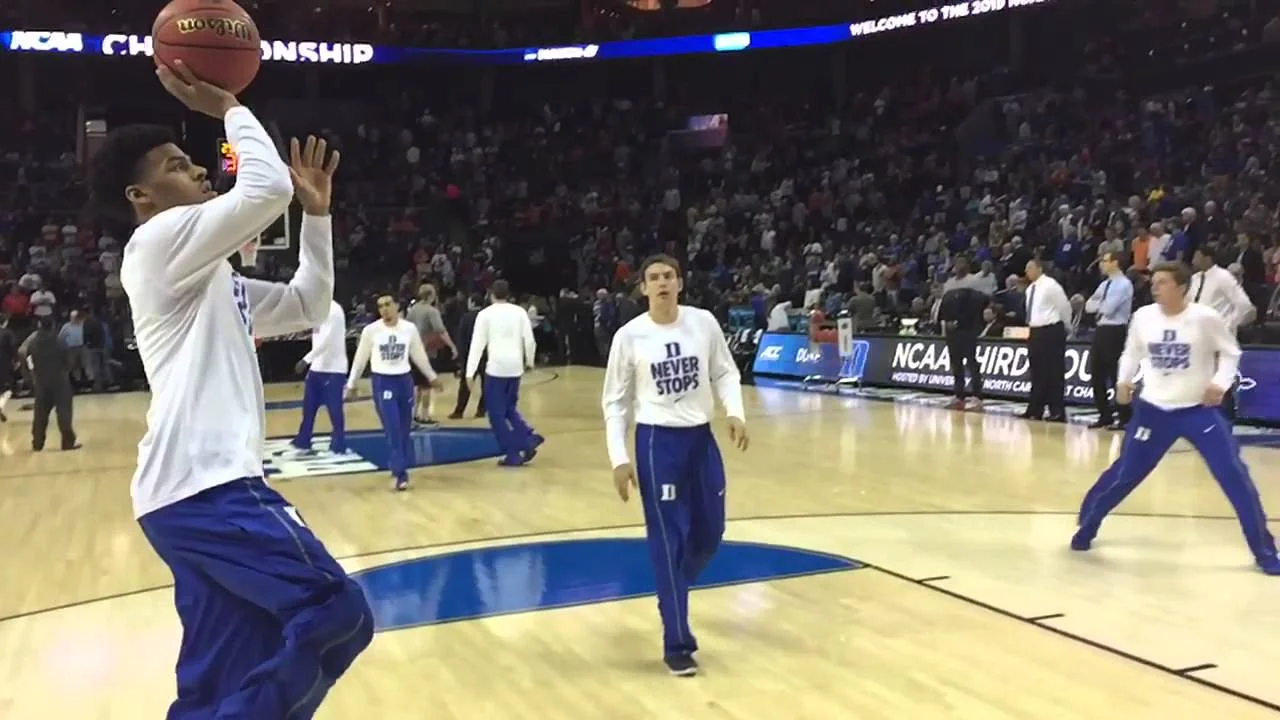
These pre-game preparations are certainly important for warming up the arms and legs, getting the heart rate up and loosening up muscles. But maybe more importantly, this skill repetition also gets the brain ready for the hundreds of actions it will need to perform soon after.