Your kids want you to be proud of them. This need for a parent’s approval can be a powerful or destructive force when it comes to youth sports. When we communicate goals for our budding superstars, the wording we choose can make all the difference.
New research out of Ithaca College shows the effect parents can have on their kids’ game-time anxiety, which can directly impact their performance and overall enjoyment of the game.
For many elite team coaches, the greater challenge in developing top young athletes is not improving the ones on your team, but rather finding the talented kids that got away from the sport. Keeping the next Lionel Messi or Michael Phelps involved and motivated from age 7 to 17 is becoming more difficult. While over 35 million kids between 4 and 14 play organized sports in the U.S., over 70% will drop out by age 13. According to new research, that drastically reduced talent pool may be caused by the athlete’s own psychological profile and how a coach manages it.
According to a 2004 study by Michigan State’s Institute for the Study of Youth Sport, here are the top ten reasons why boys and girls quit organized sports:
Boys
I was no longer interested.
It was no longer fun.
The sport took too much time
The coach played favourites.
The coach was a poor teacher.
I was tired of playing.
There was too much emphasis on winning.
I wanted to participate in other non-sport activity.
I needed more time to study.
There was too much pressure.
Girls
I was no longer interested.
It was no longer fun.
I needed more time to study.
There was too much pressure
The coach was a poor teacher.
I wanted to participate in other non-sport activities.
The sport took too much time.
The coach played favourites.
I was tired of playing.
Games and practices were scheduled when I could not attend.
Comparing the lists, when a young athlete loses interest and does not have fun, (partly because the coach applied too much pressure or they were a poor teacher), it may be due to their internal mindset based on an educational psychology concept known as the Achievement Goal Theory (AGT).
Psychologists Carol Dweck and Thomas Nicholls, while they worked together at the University of Michigan, both studied students who failed to learn and their research resulted in parallel tracks, just with different terminology. For Dweck, she defined two styles of learning motivation as Mastery and Performance. Take for example, a young soccer player that spends hours in the backyard learning to juggle a ball. For a player with a Performance mindset, he is practicing because of a desire to be the best juggler on the team or maybe because he is embarrassed by his lack of skill compared to his teammates.
On the opposite end, a player with a Mastery mindset is motivated to learn simply by the challenge of the skill without any competitive instincts. Nicholls uses the terms Task to compare with Dweck's Mastery and substitutes Ego instead of Performance. Both Dweck and Nicholls agree that the player’s perceived ability and competence also affects their motivation to keep trying to learn the new skill. Here’s a great video overview of the concepts by Professor Jonathan Hilpert of Georgia Southern University.
In fact, in a study this year of 167 junior club soccer players in England, Andrew Hill, sports scientist at the University of Leeds, found that a quarter of the boys experienced symptoms of burnout.
"What we see among the athletes showing symptoms of burnout is emotional and physical exhaustion, a sense that they are not achieving and a sense of devaluation of the sport. Even though they might originally enjoy their sport and be emotionally invested in it, they eventually become disaffected. Participation can be very stressful," Dr. Hill said.
However, the results showed that those players who admitted being more afraid of making mistakes in front of others (a Performance/Ego mindset) were also much more likely to suffer from burnout versus those players that were driven by their own high standards (a Mastery/Task mindset).
"Perfectionism can be a potent energising force but can also carry significant costs for athletes when things don't go well,” Dr. Hill commented. “Perfectionists are stuck in a self-defeating cycle. They are overly dependent on personal accomplishment as a means of establishing a sense of self-esteem but are always dissatisfied with their efforts. Even success can be problematic because they simply become more demanding until they inevitably experience failure.”
A coach can have a significant impact on motivating learning by the type of environment they create, one that rewards players for self-improvement alone or one that rewards improvement compared to others. Last year, French researchers surveyed 309 young, elite handball players about four things, their perception of their coach’s motivational environment, their own perceived competence, their type of learning motivation and any symptoms of burnout.
They concluded that “young talented athletes perceiving an ego-involving climate had a higher risk of experiencing burnout symptoms at the season’s end. In contrast, players perceiving a high task-involving climate had lower burnout scores when the season concluded.”
Once again the coach-athlete relationship becomes critical to development of elite potential and performances. The more training data that can be captured and analyzed, the better the subtle hints of burnout can be detected.
Amazing young athletes have been going viral lately. Did you see the video of the 11-year-old star of the Downey Christian high school varsity basketball team, who recently performed at halftime of an Orlando Magic game? How about the 9-year-old girl running around and over the boys in her youth football league, who was invited to sit next to NFL Commissioner Roger Goodell at last month’s Super Bowl? Then there’s the 10th grader who is currently starting for the Erie Otters, a major junior hockey team with an average age of 19, whose agent is Hall of Famer Bobby Orr and who NHL star Sidney Crosby compares to himself.
These young YouTube sensations, Julian Newman, Sam Gordon and Connor McDavid, have all been dealing with the crush of recent media attention thanks to their incredible athletic skills. Certainly, there are more like them across the country waiting to be discovered, but the stories of these three give us a chance to look behind the highlights for similarities and clues of early athletic achievement. According to two new studies, it is all about their mind-set.
To most kids, making their high school varsity basketball team when they’re only in 6th grade and 4’ 5” tall would sound impossible. Many young girls (and their parents) wouldn’t think of playing in a boys football league assuming they could never compete. And a 16 year old hockey player is often told that the odds of him ever playing in college or the pros is a long shot unless you were born with just the right set of skills.
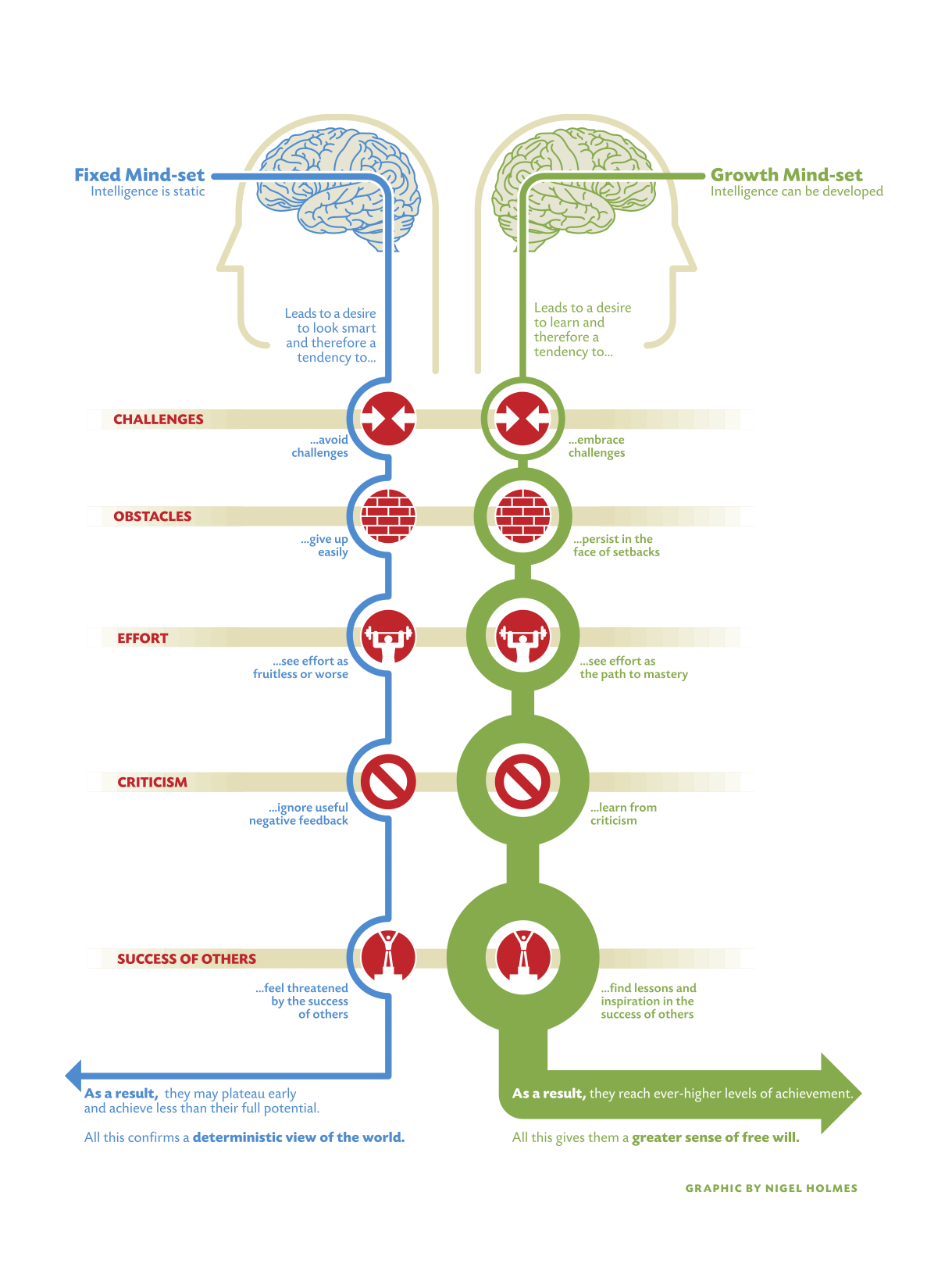
Carol Dweck, Stanford University psychology professor, calls this a fixed mind-set, believing that the skills you were born with define the upper limits of your success in life. Conversely, those students with a growth mind-set are driven by their desire to learn new things and look at failure as just part of the process. A fixed mind-set dwells on performance goals; only trying new tasks that they believe fall within their innate gifts. A growth mind-set thrives on learning goals and can’t wait to take on the next challenge even it means a struggle.
Click to enlarge graphic
In most cases, researchers believe we can thank our parents for giving us our current mind-set. Two new studies have confirmed that how parents praise their children can have a lasting effect on how their kids face new challenges.
Dweck and a team from Stanford, Temple and the University of Chicago videotaped mothers with their toddlers at ages 1, 2 and 3 as they accomplished everyday play activities. Some moms used what the researchers call “person praise”, saying things like “you’re so smart” and “you’re good at hockey.” Other moms used “process praise” with phrases like, “you figured it out” or “you learned how to make that shot.”
Five years later, the team revisited the kids and asked them if they would like to tackle some tough learning problems like math or complicated skill movements. As expected, those kids who had been praised with fixed “you’re smart” phrases were afraid to try new challenges in fear they would fail, ruining their reputation for being “smart.” On the other hand, process-praised children took on the new tasks knowing their only failure would be to not try.
“What we found was that the greater proportion of process praise, the more likely the child was to have a mindset five years later that welcomed challenges and that represented traits as malleable, not a label you were stuck with,” Dweck said. “'You're great, you're amazing' – that is not helpful. Because later on, when they don't get it right or don't do it perfectly, they'll think they aren't so great or amazing."
Their research was just published in the journal, Child Development.
Praising the wrong way seems intuitive to most parents. In a similar experiment, Dutch researchers asked 357 adults to write down the encouragement that they would give to six different children, three with high self-esteem and three with low self esteem, for completing an activity. Sample descriptions of the hypothetical kids were either, "Lisa usually likes the kind of person she is” or "Sarah is often unhappy with herself.”
The adults used person praise twice as often as process praise for the low-esteem children. "Adults may feel that praising children for their inherent qualities helps combat low self-esteem, but it might convey to children that they are valued as a person only when they succeed," lead author Eddie Brummelman of Utrecht University said. "When children subsequently fail, they may infer they are unworthy."
Eduardo Briceño, Co-Founder and CEO of Mindset Works, a company that helps schools and teachers adopt the growth mind-set, explains Dweck’s research in this recent TED talk:
Connor McDavid clearly has a growth mind-set. Sherry Bassin, general manager of the Otters, described McDavid’s attitude in a recent USA Today article, “First guy on the ice for practice, last guy off. He just loves it. He's like those doctors who can't leave the hospital for 18 hours. He is honing his skills like a top surgeon."
As for Julian and Sam, if they see walls in front of them, they have learned to either dribble or sprint around them.
As the old saying goes, “you can’t coach height”, but, according to researchers at the University of South Australia, you can recruit and develop key skills beyond genetic gifts. That was their conclusion after interviewing 90 elite basketball coaches from around the world, including men and women from major college programs and professional teams from the NCAA, NBA, WNBA, and 10 other international leagues.
"Game statistics are commonly used to recruit basketball players but by watching players on the court, and how they behave outside of it, coaches can pick up a lot of non-physical factors that indicate whether a player is likely to make the grade,” said Michael Rogers, a PhD student in the university’s Allied Health and Human Performance program and lead author of the study.
With team training now resume for many leagues around the world, athletes are increasing their physical fitness levels back up to in-season form. Well-known data metrics, like heart rate, speed, and power, are being uploaded and summarized by performance trainers and scrutinized by coaches. But, mentally, where is the team at? Are they cognitively as sharp as they were two months ago? Are they thinking about family members or friends? How has this new pattern of living affected their brain?
Of course, team psychologists will have discussions with players, when needed, to address any concerns that they bring forward. Yet, it would benefit players and the team if there was a standardized framework for assessing their overall readiness to endure the battle on the field, in other words, their cognitive fitness. On top of physical capabilities, the variables of anticipation, awareness, perception and decision-making often determine the outcome of a game.
Because we all need one more reason to get off the couch and on the treadmill or the empty trail while we work from home, researchers at the University of California, Davis have found that the neurotransmitters in our brains actually switch into a hyper-learning mode after aerobic exercise.
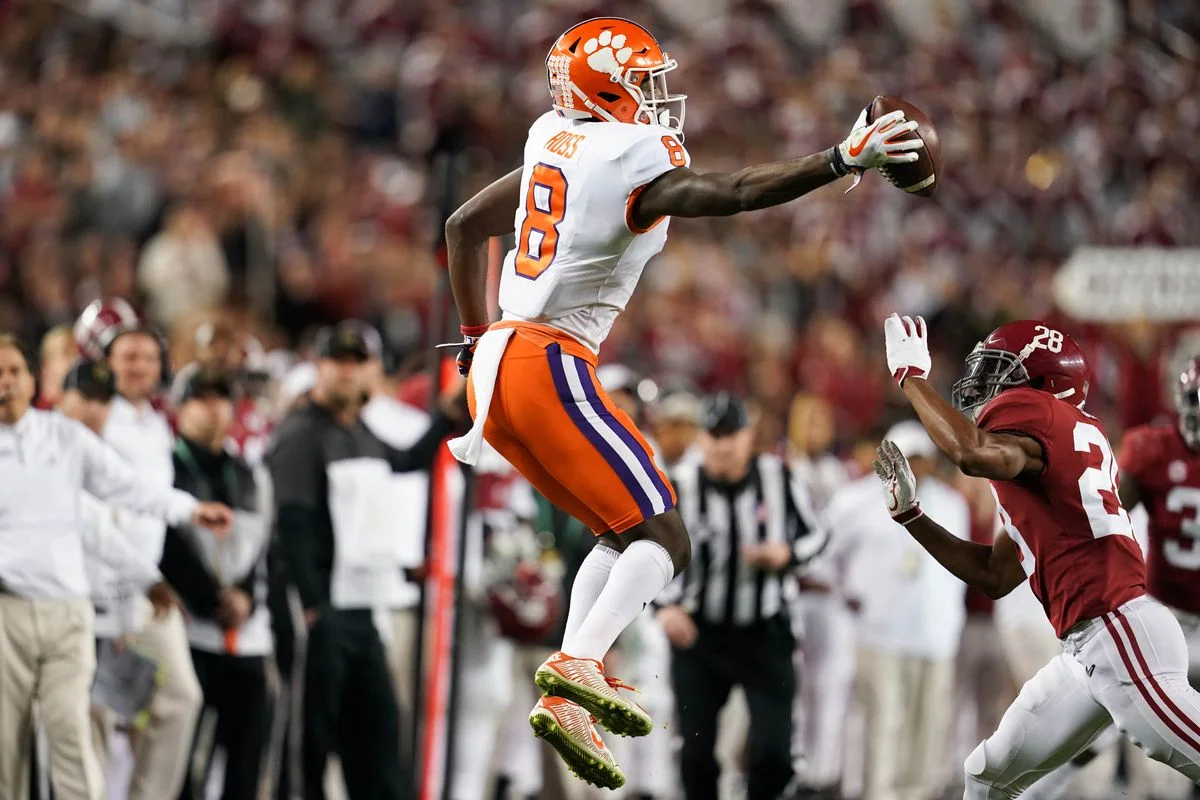
n the 2019 College Football Playoff National Championship game, two true freshmen, quarterback Trevor Lawrence and wide receiver Justyn Ross, made a startling statement as they dominated the defending champion Alabama Crimson Tide. The Lawrence to Ross connection produced 6 catches for 153 yards, including a game-breaking 74-yard touchdown pass and a one-handed circus catch for a late, crucial first down. Two 19-year-olds, one 6 feet, 6 inches and the other 6’ 4”, outplayed one of the best defensive units in the country.
In our latest book, we featured the rise of Justyn Ross and his ironic results at Nike’s “The Opening” competition for high school football stars. Despite the speed and athleticism that Ross displayed in the national championship game, he has another, defining quality that doesn’t show up in the SPARQ ratings - he’s a Playmaker.
The double-edged sword of respect and expectation that comes with the number 10 jersey is reserved for the shoulders of a player that can handle the weight. So when Jürgen Klinsmann, former U.S. Men’s National Team head coach, handed it to seventeen-year-old Christian Pulisic before a 2016 World Cup qualifier game, he knew the load that was being placed on the young playmaker. “The No. 10 has a meaning,” Klinsmann said. “Ask him now how he feels with that heavy number on his back.”
That night, Pulisic responded brilliantly, scoring two goals and assisting on a third in just twenty-six minutes, making him the youngest U.S. player ever to score in a World Cup qualifier. Even Bruce Arena, who’s seen his share of promising prospects in his forty years of coaching at the college, pro, and national team levels, believes in Pulisic. “I think he is just a natural,” said Arena. “The game’s easy for him. He’s got exceptional skill, vision, he’s pretty smooth.” Wary of anointing him a savior too early, Arena did inch out on a limb when pressed: “It makes you think that this is going to be perhaps the first American superstar in the sport. You have to be hesitant about this but this is a very talented young man.”
For those baseball hitters who can do the former, the latter comes much easier. Seeing, identifying and selecting which pitch to swing at is a combination of visual perception, brain processing and motor skill execution. Sure, the physics of hitting a baseball, measured by things called launch angle and exit velocity, determine the trajectory and distance of a batted ball. But it’s that pre-contact decision making process that gets hitters on base so they can score runs and win games. Just as bat speed, leg drive and arm strength define the distance of a hit, the purely cognitive skills of perception, information processing and hand-eye coordination pick out the best pitch to hit and, more importantly, which pitch to avoid.
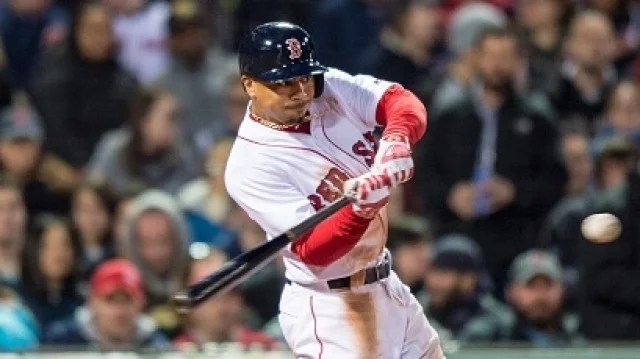
And when you’re 5 feet, 9 inches tall, you rely on those brain skills much more than physical dominance to stay up in the big leagues. That’s exactly what Mookie Betts, right fielder for the 2018 World Champion Boston Red Sox, has done over his young four-season career. Sure, he won the AL batting title this year with a .346 batting average, but he also had a league high slugging percentage, with 32 home runs and 80 RBIs.
Substituting brain for brawn, Betts excels in a category of baseball analytics known as plate discipline, in other words, picking the right pitch to swing at and then making contact with that swing. In the pre-swing decision-making process, hitters with good plate discipline swing at pitches in the strike zone, not out of it. When they do decide to swing, they make contact more often with better hand-eye coordination.
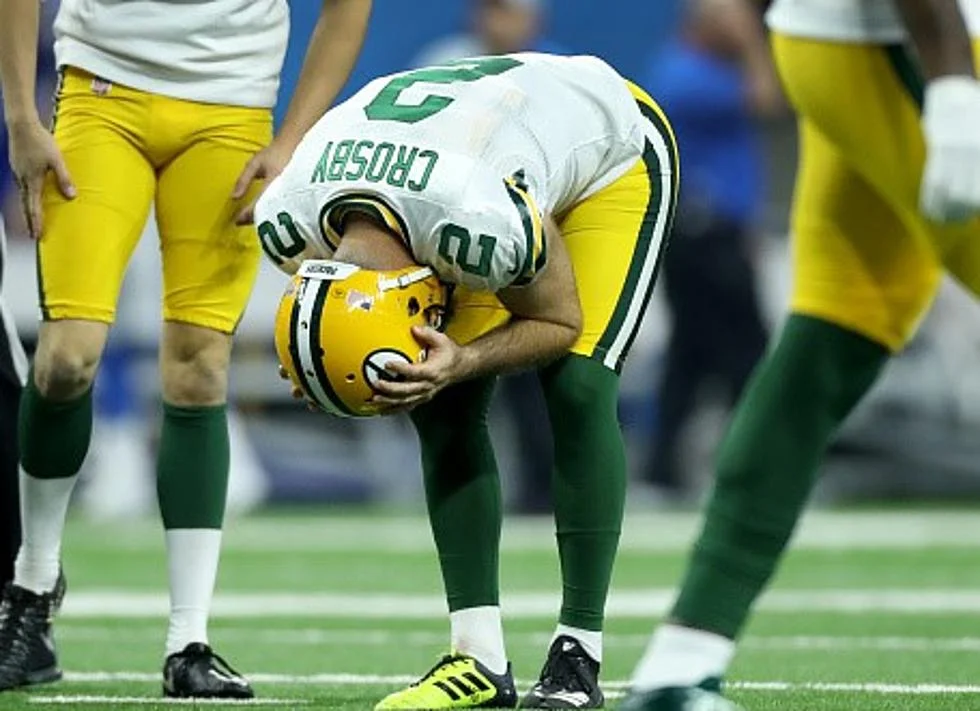
“I’ve done this a long time and I’ve never had a game like that. This is uncharted territory.” To be sure, it was one of Mason Crosby’s worse games of his 12-year NFL kicking career, missing four out of five field goals and an extra point. In his last five full seasons, the Green Bay Packers kicker has made an average of 85% of his field goals, so his week 5 game, a 31-23 loss to the Detroit Lions, was more than a statistical anomaly. Missing wide from 42, 41, 38 and 56 yards, Crosby was at a loss to explain his sudden inaccuracy, “Every attempt I felt like I was in rhythm going through it,” said Crosby. “It was one of those days that just wasn’t there. I’ve done this a long time, and I’ve never had a day where it wasn’t there like that.”
These pre-game preparations are certainly important for warming up the arms and legs, getting the heart rate up and loosening up muscles. But maybe more importantly, this skill repetition also gets the brain ready for the hundreds of actions it will need to perform soon after.