Just ask the primary decision makers across different sports. Quarterbacks, point guards, or midfielders would agree that making the right choices during a game would be a whole lot easier if it weren’t for the constant distractions. Whether it be a blitzing linebacker or a 1v1 defender, staying focused on the next decision seems like an sequential process; something that can’t be dealt with until the current distraction is neutralized. However, researchers from Carnegie Mellon University have learned that our multitasking brains continue to mull impending decisions in the background while our conscious brain handles the noise in front of us.
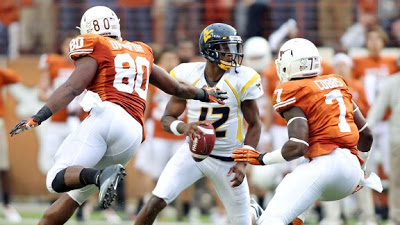
Picture a quarterback walking to the line of scrimmage with the play he called in the huddle. Based on the defense he sees in front of him, he is processing his receiver options, searching for a correct decision. After the snap of the ball, that thought process is interrupted by two linebackers bursting through the line. First, deal with the distraction and avoid the sack. Second, reengage the prior decision tree to find the open receiver. To our QB, this seems like a serial event, but David Creswell, assistant professor of psychology at CMU, showed that it’s actually a parallel process in our brains.
Using neuroimaging tools, his team watched the brains of 27 adults while they were gathering information to make a decision. They noted that the visual and prefrontal cortices, areas of the brain known for decision making, were active when the volunteers were learning new information and considering options. Just before they were asked to make a decision, they were distracted with having to memorize sequences of numbers, which involves other areas of the brain.
What they found was that even during the distraction, the participants’ visual and prefrontal cortices remained active, still working unconsciously on the decision task. In fact, the group that endured the distractions did just as well at making the right decision as a control group that was not distracted.
In this video, Creswell and co-author James Bursely explain their experiment:
"This research begins to chip away at the mystery of our unconscious brains and decision-making," said Creswell. "It shows that brain regions important for decision-making remain active even while our brains may be simultaneously engaged in unrelated tasks. What's most intriguing about this finding is that participants did not have any awareness that their brains were still working on the decision problem while they were engaged in an unrelated task."
Now, the use of background processing by the brain should not be confused with intuition, made popular by Malcolm Gladwell’s book, Blink. More formally known as our adaptive unconscious, Gladwell focused on our perceived ability to make snap judgements without really understanding how we arrived at our conclusion.
When under fire during a game, athletes may well be making very quick decisions without the luxury of time to analyze all the information. Experience and practice helps build those automatic responses. Those players with a richer database of solutions should see more accurate knee jerk responses when needed.
Most likely, what helps elite athletes come through in a clutch is a combination of real-time, background processing and a honed intuition gained from experience.
Most baseball general managers live in obscurity most of their careers. Its their first hire, the manager, that usually gets the red hot spotlight, after every win and loss, second-guessed by reporters with recorders and then later by fans. The GM puts the players on the field and lets the manager and his coaches take it from there. Billy Beane , Oakland A's general manager, could have also been an unknown, albeit interesting, name to the baseball audience if it were not for author Michael Lewis' 2003 book, Moneyball . Moneyball was a runaway hit (even today, 5 years later, it is #19 on Amazon's list of baseball books). It has morphed into a full-fledged catchphrase philosophy used by everyone from Wall Street (where Beane borrowed the concept) to business consulting. The general theme is to find undervalued assets (ballplayers) by focusing on statistics that your competition is ignoring. Of course, you have to believe in your metrics and their predictive value for success (why has everyone else ignored these stats?) The source of most of Beane's buried treasure of stats was Bill James and his Sabrmetrics. Like picking undervalued stocks of soon to explode companies, Beane looked for the diamond in the dust (pun intended) and sign the player while no one was looking. Constrained by his "small-market" team revenues, or maybe by his owners' crowbar-proof wallets, he needed to make the most from every dollar.
The combination of a GM's shrewd player selection and a manager who can develop that talent should reward the owner with the best of both worlds: an inexpensive team that wins. This salary vs. performance metric is captured perfectly in this "real-time" graphic at BenFry.com . It connects the updated win-loss record for each MLB team with its payroll to show the "bang for the buck" that the GMs/managers are getting from their players. Compare the steep negative relationship for the Mets, Yankees, Tigers and Mariners with the amazing results of the Rays, Twins and Beane's own A's. While the critics of Moneyball tactics would rightly point to the A's lack of a World Series win or even appearance, the "wins to wages" ratio has not only kept Beane in a job but given him part ownership in the A's and now the newly resurrected San Jose Earthquakes of soccer's MLS. Beane believes the same search for meaningful and undiscovered metrics in soccer can give the Quakes the same arbitrage advantage. In fact, there are rumours that he will focus full-time on conquering soccer as he knows there are much bigger opportunities worldwide if he can prove his methods within MLS.
In baseball, Beane relied on the uber-stat guru, Bill James, for creative and more relevant statistical slices of the game. In soccer, he is working with some top clubs including his new favorite, Tottenham-Hotspur, of the English Premier League. While he respects the history and tradition of the game, he is confident that his search for a competitive advantage will uncover hidden talents. Analytical tools from companies such as Opta in Europe and Match Analysis in the U.S. have combined video with detailed stat breakdowns of every touch of the ball for every player in each game. Finding the right pattern and determinant of success has become the key, according to Match Analysis president Mark Brunkhart as quoted earlier this year, "You don't need statistics to spot the real great players or the really bad ones. The trick is to take the players between those two extremes and identify which are the best ones. If all you do is buy the players that everyone else wants to buy then you will end up paying top dollar. But if you take Beane's approach - to use a disciplined statistical process to influence the selection of players who will bring the most value - then you are giving yourself the best chance of success. Who would not want to do that?"
Not to feel left out (or safe from scrutiny), the NBA now has its own sport-specific zealots. The Association for Professional Basketball Research (APBR) devotes its members time and research to finding the same type of meaningful stats that have been ignored by players, coaches and fans. They, too, have their own Moneyball-bible, "The Wages of Wins " by David Berri, Martin Schmidt, and Stacey Brook. David Berri's WoW journal/blog regularly posts updates and stories related to the current NBA season and some very intriguing analysis of its players and the value of their contributions. None other than Malcolm Gladwell, of Tipping Point and Blink fame, provided the review of Wages of Wins for the New Yorker. One of the main stats used is something called a player's "Win Score" which attempts to measure the complete player, not just points, rebounds and assists.
WS is then adjusted for minutes played with the stat, WS48. Of course, different player positions will have different responsibilities, so to compare players of different positions the Position Adjusted Win Score per 48 minutes or PAWS48 is calculated as: WS48 – Average WS48 at primary position played. This allows an apples to apples comparison between players at a position, and a reasonable comparison of players' values across positions. Berri's latest article looks at the fascination with Michael Beasley and some early comparisons in the Orlando Summer League.
Will these statistics-based approaches to player evaluation be accepted by the "establishment"? Judging by the growing number of young, MBA-educated GMs in sports, there is a movement towards more efficient and objective selection criteria. Just as we saw in previous evidence-based coaching articles , the evidence-based general manager is here to stay.
The Playmaker’s Decisions
Buy our new book! Available now in ebook, paperback and audiobook
As the old saying goes, “you can’t coach height”, but, according to researchers at the University of South Australia, you can recruit and develop key skills beyond genetic gifts. That was their conclusion after interviewing 90 elite basketball coaches from around the world, including men and women from major college programs and professional teams from the NCAA, NBA, WNBA, and 10 other international leagues.
"Game statistics are commonly used to recruit basketball players but by watching players on the court, and how they behave outside of it, coaches can pick up a lot of non-physical factors that indicate whether a player is likely to make the grade,” said Michael Rogers, a PhD student in the university’s Allied Health and Human Performance program and lead author of the study.
With team training now resume for many leagues around the world, athletes are increasing their physical fitness levels back up to in-season form. Well-known data metrics, like heart rate, speed, and power, are being uploaded and summarized by performance trainers and scrutinized by coaches. But, mentally, where is the team at? Are they cognitively as sharp as they were two months ago? Are they thinking about family members or friends? How has this new pattern of living affected their brain?
Of course, team psychologists will have discussions with players, when needed, to address any concerns that they bring forward. Yet, it would benefit players and the team if there was a standardized framework for assessing their overall readiness to endure the battle on the field, in other words, their cognitive fitness. On top of physical capabilities, the variables of anticipation, awareness, perception and decision-making often determine the outcome of a game.
Because we all need one more reason to get off the couch and on the treadmill or the empty trail while we work from home, researchers at the University of California, Davis have found that the neurotransmitters in our brains actually switch into a hyper-learning mode after aerobic exercise.
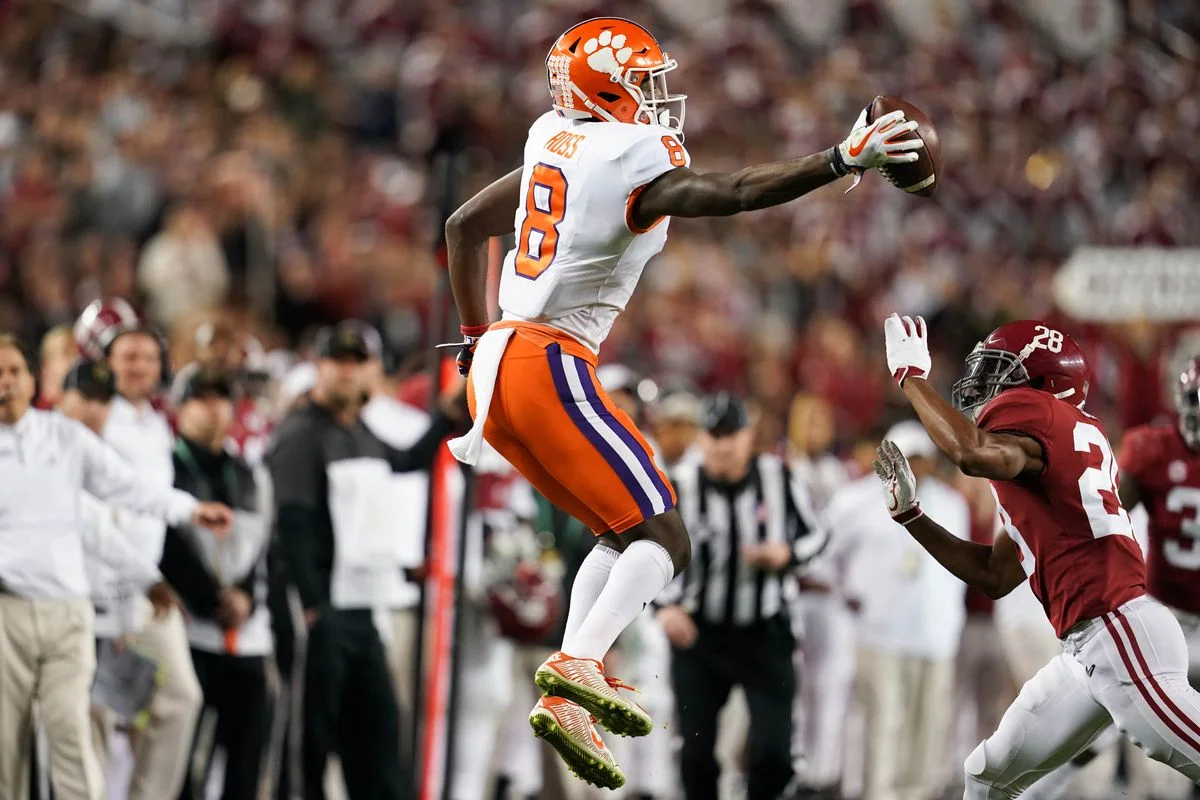
n the 2019 College Football Playoff National Championship game, two true freshmen, quarterback Trevor Lawrence and wide receiver Justyn Ross, made a startling statement as they dominated the defending champion Alabama Crimson Tide. The Lawrence to Ross connection produced 6 catches for 153 yards, including a game-breaking 74-yard touchdown pass and a one-handed circus catch for a late, crucial first down. Two 19-year-olds, one 6 feet, 6 inches and the other 6’ 4”, outplayed one of the best defensive units in the country.
In our latest book, we featured the rise of Justyn Ross and his ironic results at Nike’s “The Opening” competition for high school football stars. Despite the speed and athleticism that Ross displayed in the national championship game, he has another, defining quality that doesn’t show up in the SPARQ ratings - he’s a Playmaker.
The double-edged sword of respect and expectation that comes with the number 10 jersey is reserved for the shoulders of a player that can handle the weight. So when Jürgen Klinsmann, former U.S. Men’s National Team head coach, handed it to seventeen-year-old Christian Pulisic before a 2016 World Cup qualifier game, he knew the load that was being placed on the young playmaker. “The No. 10 has a meaning,” Klinsmann said. “Ask him now how he feels with that heavy number on his back.”
That night, Pulisic responded brilliantly, scoring two goals and assisting on a third in just twenty-six minutes, making him the youngest U.S. player ever to score in a World Cup qualifier. Even Bruce Arena, who’s seen his share of promising prospects in his forty years of coaching at the college, pro, and national team levels, believes in Pulisic. “I think he is just a natural,” said Arena. “The game’s easy for him. He’s got exceptional skill, vision, he’s pretty smooth.” Wary of anointing him a savior too early, Arena did inch out on a limb when pressed: “It makes you think that this is going to be perhaps the first American superstar in the sport. You have to be hesitant about this but this is a very talented young man.”
For those baseball hitters who can do the former, the latter comes much easier. Seeing, identifying and selecting which pitch to swing at is a combination of visual perception, brain processing and motor skill execution. Sure, the physics of hitting a baseball, measured by things called launch angle and exit velocity, determine the trajectory and distance of a batted ball. But it’s that pre-contact decision making process that gets hitters on base so they can score runs and win games. Just as bat speed, leg drive and arm strength define the distance of a hit, the purely cognitive skills of perception, information processing and hand-eye coordination pick out the best pitch to hit and, more importantly, which pitch to avoid.
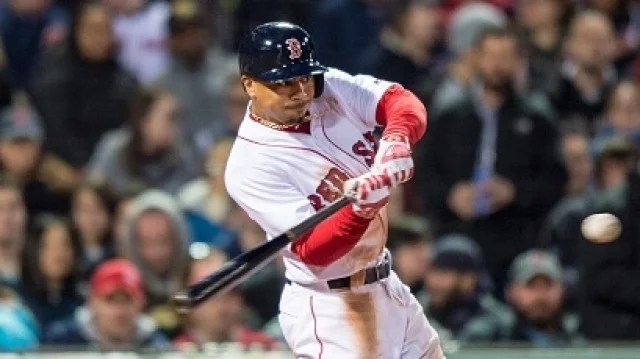
And when you’re 5 feet, 9 inches tall, you rely on those brain skills much more than physical dominance to stay up in the big leagues. That’s exactly what Mookie Betts, right fielder for the 2018 World Champion Boston Red Sox, has done over his young four-season career. Sure, he won the AL batting title this year with a .346 batting average, but he also had a league high slugging percentage, with 32 home runs and 80 RBIs.
Substituting brain for brawn, Betts excels in a category of baseball analytics known as plate discipline, in other words, picking the right pitch to swing at and then making contact with that swing. In the pre-swing decision-making process, hitters with good plate discipline swing at pitches in the strike zone, not out of it. When they do decide to swing, they make contact more often with better hand-eye coordination.
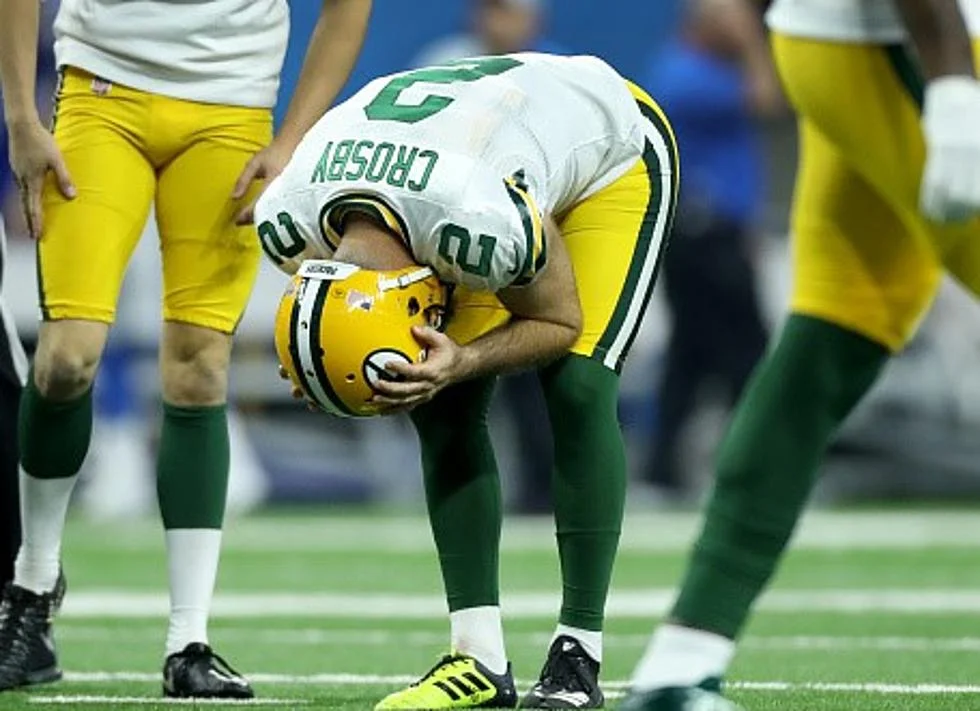
“I’ve done this a long time and I’ve never had a game like that. This is uncharted territory.” To be sure, it was one of Mason Crosby’s worse games of his 12-year NFL kicking career, missing four out of five field goals and an extra point. In his last five full seasons, the Green Bay Packers kicker has made an average of 85% of his field goals, so his week 5 game, a 31-23 loss to the Detroit Lions, was more than a statistical anomaly. Missing wide from 42, 41, 38 and 56 yards, Crosby was at a loss to explain his sudden inaccuracy, “Every attempt I felt like I was in rhythm going through it,” said Crosby. “It was one of those days that just wasn’t there. I’ve done this a long time, and I’ve never had a day where it wasn’t there like that.”
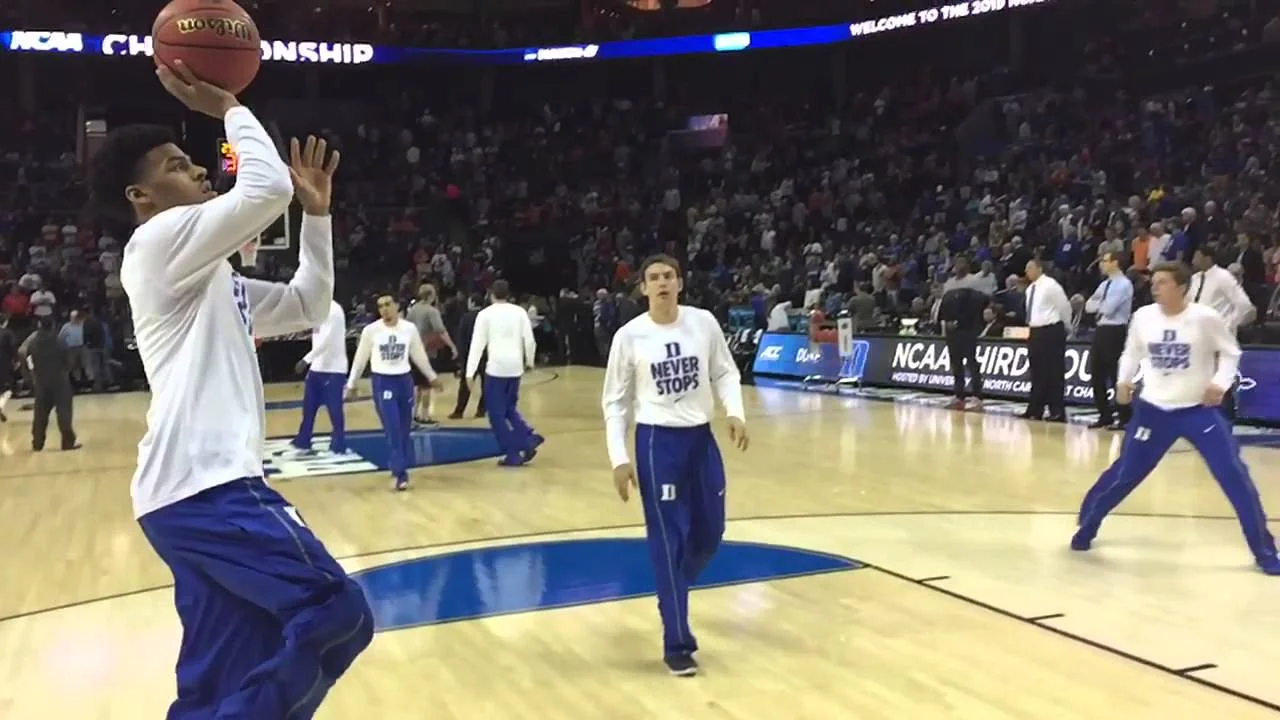
These pre-game preparations are certainly important for warming up the arms and legs, getting the heart rate up and loosening up muscles. But maybe more importantly, this skill repetition also gets the brain ready for the hundreds of actions it will need to perform soon after.