Top Athletes Can React Quicker
/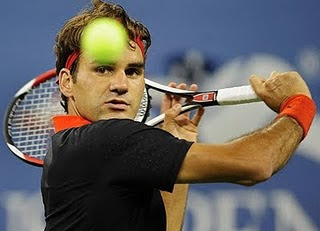
The results of the study, which appear in the most recent issue of NeuroReport, show that more experienced sports players are better able to detect early anticipatory clues from opposing players' body movements, giving them a split second advantage in preparing an appropriate response.
Recent studies have demonstrated how expertise affects a range of perceptual-motor skills, from the imitation of hand actions in guitarists, to the learning of action sequences in pianists and dancers. In these studies, experts showed increased activation in the cortical networks of the brain compared with novices.
Fast ball sports are particularly dependent on time-critical predictions of the actions of other players and of the consequences of those actions, and for several decades, sports scientists have sought to understand how expertise in these sports is developed.
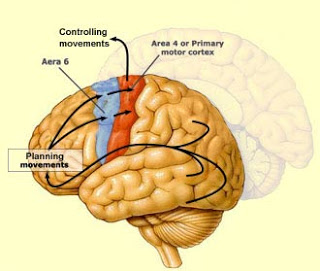 This most recent study, headed by Dr Michael Wright, was carried out by observing the reaction time and brain activity of badminton players of varying degrees of ability, from recreational players to international competitors. Participants were shown video clips of an opposing badminton player striking a shuttlecock and asked to predict where the shot would land.
In all participants, activation was observed in areas of the brain previously associated with the observation, understanding and preparation of human action; expert players showed enhanced brain activity in these regions and responded more quickly to the movements of their opponents.
Expertise in sports is not only dependent on physical prowess, then, but also on enhanced brain activity in these key areas of the brain. The observations made during this study will certainly have implications for how we perceive the nature of expertise in sport and perhaps even change the way athletes train.
See also: The Cognitive Benefits of Being a Sports Fan and How To See A 130 MPH Tennis Serve
Source: Wolters Kluwer Health / Lippincott Williams & Wilkins and Functional MRI reveals expert-novice differences during sport-related anticipation : Neuroreport